 Ningyuan Fastener
Black Screws are easy to recognize: their dark heads stand out against pale timber, painted panels, and metal fittings. But “black” describes appearance, not one universal material or coating. The finish may come from black oxide, phosphate, paint, or another treatment, and each option behaves differently. That distinction matters when a screw will face moisture, friction, or repeated handling.
A practical guide should examine what black finishes do, where these screws are commonly used, and how to select the right type. For example, a drywall screw’s brittle construction and sharp threads suit fastening boards to framing, but do not make it suitable for every outdoor project. A black coating may offer some protection, yet it does not automatically mean the screw is corrosion-proof. Check the product specifications. Match the screw to the material. Small choices matter.
Engineering author Henry Petroski is known for examining how design and failure inform one another. That perspective is useful here, though no verified direct quotation from him about Black Screws was supplied, so I will not invent one. A sound principle is simple: “Choose the fastener for the conditions, not just its color.” It is guidance, not a quote attributed to Petroski. Even experienced builders can overlook coating limits when a finish looks durable. This article explains what to check before relying on appearance alone.
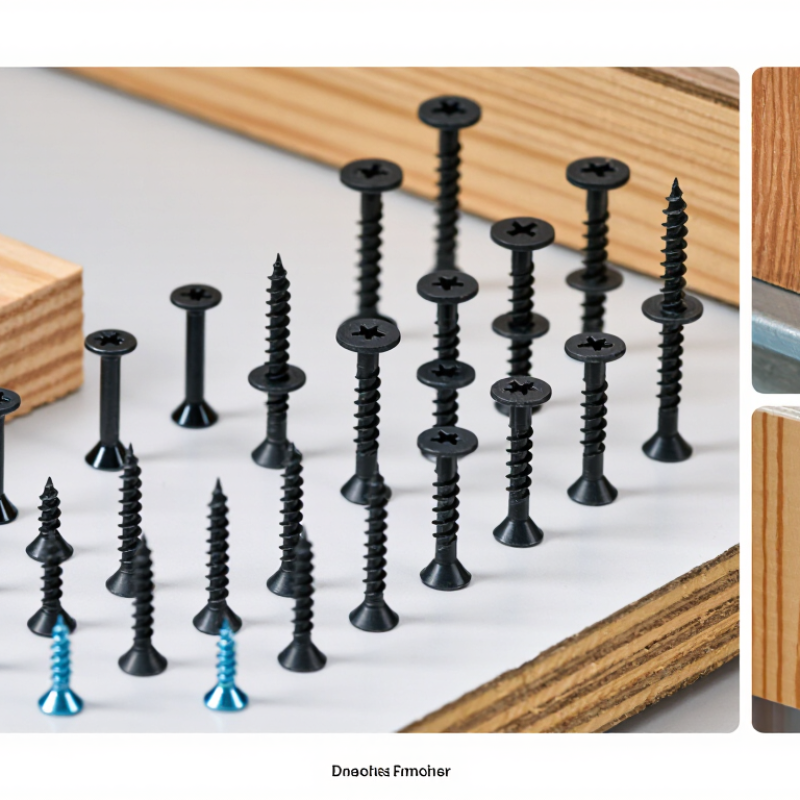
What Are Black Screws and What Are They Used For?
Black screws are fasteners with a dark surface finish, usually black oxide, phosphate, or a protective polymer coating. The color alone does not identify the material or performance. Most are made from carbon steel and feature sharp threads, hardened points, and Phillips, square, or Torx drives. Their dark appearance suits furniture, cabinetry, drywall, metal framing, and interior construction.
Black oxide creates a thin conversion layer that improves appearance and reduces mild oxidation. Phosphate finishes provide better grip under paint or joint compound. Polymer-coated screws may offer stronger moisture resistance. However, black does not automatically mean rustproof. ASTM F606/F606M testing procedures help evaluate mechanical properties, while ISO 4042 addresses electroplated fastener coatings. These standards matter more than color. Market research from Grand View Research valued the global industrial fasteners market at approximately $84.9 billion in 2023, showing the scale of this product category. Yet, finish selection remains surprisingly overlooked.
Tips: Check the package for coating type, hardness, and corrosion guidance. Match the screw length to the material thickness. For damp locations, choose a tested corrosion-resistant finish. Avoid mixing black screws with untreated steel outdoors. I have seen attractive finishes fail quickly when moisture enters cut edges. A small pilot hole can prevent splitting, especially in hardwood. Do not judge strength by appearance.
| Data Dimension | Key Point | Accurate Description |
|---|---|---|
| Definition | What black screws are | Black screws are threaded fasteners with a dark-colored surface created by a coating, conversion finish, or the natural appearance of certain materials. The black color identifies the finish, not a single screw material or application. |
| Common Base Materials | Steel and stainless steel | Many black screws are manufactured from carbon steel or alloy steel. Stainless steel screws may also receive a black finish when corrosion resistance and a dark appearance are both required. |
| Typical Black Finishes | Oxide, phosphate, and coatings | Common finishes include black oxide, black phosphate, painted or polymer coatings, and other proprietary surface treatments. Each finish provides a different balance of appearance, friction, corrosion protection, and durability. |
| Black Oxide Finish | Appearance and dimensional stability | Black oxide forms a thin black conversion layer on steel. It generally changes dimensions very little and is often supplemented with oil or another after-treatment because black oxide alone offers limited corrosion protection. |
| Black Phosphate Finish | Coating and paint adhesion | Black phosphate creates a dark, slightly textured surface that can retain lubricants and provide a useful base for additional coatings. It is commonly selected for indoor construction and general fastening applications. |
| Corrosion Resistance | Depends on finish and environment | A black appearance does not automatically mean high corrosion resistance. Outdoor, humid, marine, or chemically aggressive environments require a finish and base material specifically rated for those conditions. |
| Drive Styles | Installation interface | Black screws may use Phillips, slotted, square, hex, or star-style drives. The drive choice affects bit engagement, resistance to cam-out, installation speed, and the tools required. |
| Head Styles | Flush or exposed head designs | Common head styles include flat or countersunk heads for a near-flush surface, pan heads for general fastening, and hex or washer heads for higher driving torque or improved load distribution. |
| Thread Types | Material and fastening method | Coarse threads are commonly used in wood and some sheet materials, while fine threads are often used in metal applications. Self-drilling and self-tapping designs can form or cut threads in suitable thin materials. |
| Common Applications | Construction and assembly | Black screws are used for woodworking, cabinet and furniture assembly, drywall installation, interior construction, metal fabrication, equipment assembly, and applications where a dark fastener is visually preferred. |
| Woodworking Use | Joining wood components | Wood screws with black finishes are used to join timber, plywood, fiberboard, and related materials. The selected screw should match the material thickness, pilot-hole requirements, head style, and expected load. |
| Drywall Use | Attaching drywall panels | Black phosphate-coated drywall screws are commonly used for fastening gypsum panels to wood or metal framing. Their bugle-shaped heads help reduce surface damage when properly installed. |
| Visual Appearance | Low-contrast or decorative fastening | The dark finish can blend with black hardware, dark fittings, painted surfaces, and contemporary furniture. It may also be chosen deliberately as a visible design element. |
| Strength Considerations | Material and grade matter | Strength is determined mainly by the screw's material, diameter, thread design, heat treatment, and mechanical grade—not by its black color. Fasteners should be selected according to the required tensile, shear, and pull-out loads. |
| Installation Requirements | Correct tool and torque | Use a compatible driver bit and avoid excessive torque, which can strip the drive, damage the coating, or over-penetrate the workpiece. A pilot hole may be required for hardwood, thick materials, or near-edge installation. |
| Advantages | Appearance and practical performance | Key advantages can include a clean dark appearance, reduced visual contrast on dark surfaces, availability in many head and thread configurations, and suitable performance for a wide range of indoor fastening tasks. |
| Limitations | Finish wear and environmental exposure | The finish may scratch or wear during installation, exposing the underlying metal. Some black finishes provide limited protection against rust, so they may be unsuitable for persistent moisture or outdoor exposure without additional protection. |
| Selection Factors | Choosing the right black screw | Consider the base material, screw diameter and length, thread type, head and drive style, required strength, corrosion exposure, installation method, and whether the finished appearance must remain consistent after installation. |
| Safety and Compatibility | Avoid unsuitable material combinations | Check compatibility between the screw, workpiece, and surrounding environment. In wet or corrosive conditions, the selected fastener should be appropriate for the exposure and should not create an undesirable galvanic corrosion risk with contacting metals. |
Important: Black color alone does not specify a screw's material, strength, or corrosion-resistance rating. Always verify the fastener specifications and intended service environment before installation.
Black screws are fasteners with a dark surface finish. They are usually made from carbon steel. Black is a finish, not a material category.
Common finishes include black oxide, phosphate, and black zinc. Polymer coatings may provide stronger moisture resistance. Each finish performs differently.
No, black screws are not automatically rustproof. Scratches, cut threads, and exposed heads can develop rust. Choose a tested corrosion-resistant finish for damp areas.
They are used in furniture, cabinets, drywall, metal framing, and interior construction. Their dark color blends with black hardware and shadowed joints. They also suit equipment panels and light assemblies.
No, drywall screws are designed for gypsum board and framing. They are not substitutes for structural fasteners. A sharp point does not prove high strength.
Black wood screws usually have deep threads and countersunk heads. They can sit flush in cabinets, trim, and furniture. Match the length to the material thickness.
Self-drilling black screws suit thin sheet metal and light steel assemblies. Machine screws require a prepared hole and matching nut or insert. Check the thread type carefully.
Drill a small pilot hole before driving the screw. This matters especially with hardwood. Test the hole size on scrap wood.
Check the coating type, corrosion guidance, and fastener grade. Avoid mixing black screws with untreated steel outdoors. Moisture often enters through small scratches.
No, appearance can mislead. A glossy black screw may fail in constant moisture. I sometimes trust a neat finish too much. Test one screw under real conditions.
Black Screws are fasteners recognized by their dark appearance, clean visual profile, and ability to complement modern or industrial designs. Their color may come from specialized coatings, protective finishes, heat treatment, or the use of dark-colored materials. Depending on the manufacturing method, they can offer improved corrosion resistance, reduced glare, greater surface hardness, or enhanced durability. Common varieties include wood screws, self-tapping screws, machine screws, drywall screws, and structural fasteners, each designed for specific materials and load requirements.
Black Screws are widely used in furniture, interior decoration, construction, machinery, electronics, automotive work, and general repair projects. Selecting the right screw requires considering the base material, thread design, length, strength, environmental conditions, and desired appearance. Proper installation includes using the correct driver, preparing pilot holes when needed, and avoiding excessive torque. Regular inspection and keeping the screws clean and dry can help maintain their performance and appearance over time.
