
Ningyuan Fastener
China has become a major sourcing base for precision fasteners, including Handle Screw products used in furniture, machinery, cabinets, electronics, and industrial equipment. Grand View Research estimated the global fasteners market at approximately USD 90.6 billion in 2023, with continued growth expected through 2030. Its analysis highlights rising demand for customized dimensions, corrosion resistance, and reliable production quality. The numbers are useful, but market reports use different product definitions. Buyers should read them carefully.
China’s manufacturing advantage combines large-scale machining, automated inspection, surface treatment, and flexible packaging. A well-made Handle Screw should turn smoothly, fit consistently, and resist thread damage after repeated use. John H. Bickford, a respected authority on bolted-joint engineering, emphasizes this principle: “The fastener is only one part of the joint.” That reminder matters. Product selection must consider the mating material, tightening method, load, and service environment. A polished sample proves very little.
Reports from Mordor Intelligence and Fortune Business Insights also identify Asia-Pacific as a leading region for fastener production and consumption. Yet lower pricing alone should not guide global purchasing decisions. Factory audits, material certificates, dimensional reports, salt-spray results, and traceable batch records provide stronger evidence. Some suppliers may still rely heavily on manual inspection. That is a weakness worth questioning. Experienced buyers often request pilot orders before approving long-term supply. This approach can reveal thread variation, plating inconsistency, packaging damage, or unclear tolerances before these issues reach production lines. Chinese Handle Screw manufacturers can offer real value, but dependable results require technical communication, documented controls, and honest verification.
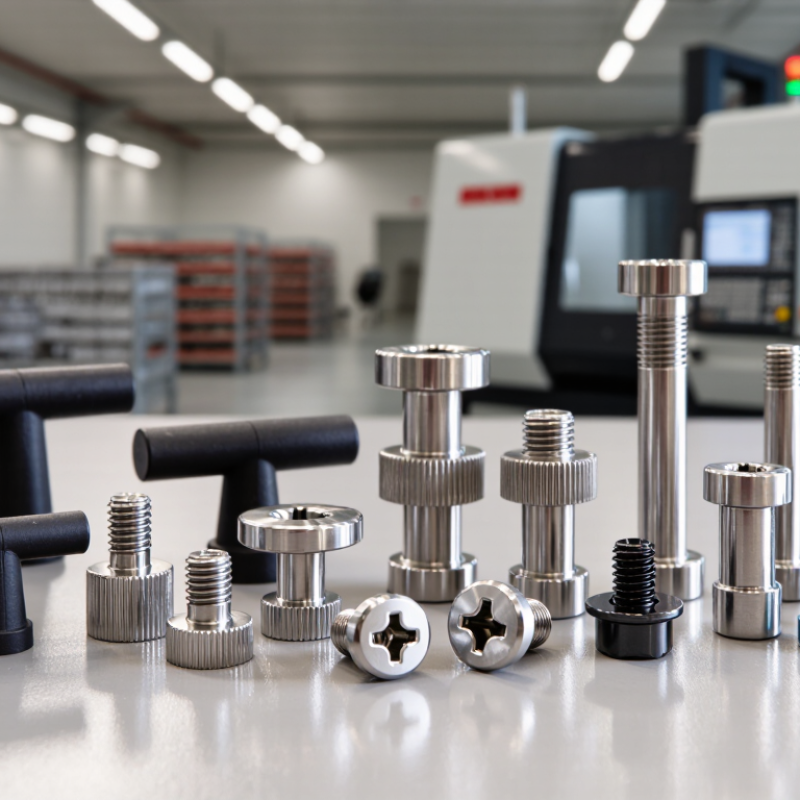
Top handle screws are fastening components with a built-in grip, allowing users to tighten or loosen them by hand. They are also called thumb screws or hand-tightening screws in many industrial catalogs. Their handle may be knurled, wing-shaped, or molded for better control. No separate tool is usually required.
These screws appear on machine guards, electrical enclosures, inspection covers, furniture panels, and laboratory equipment. They are useful where operators open the same panel repeatedly. A knurled metal head suits dusty workshops and higher tightening force. A plastic handle feels more comfortable during frequent adjustments. The correct choice depends on load, temperature, vibration, and available space.
From practical sample inspections, thread accuracy often matters more than appearance. A polished handle cannot compensate for poor engagement. Buyers working with Chinese manufacturers should check thread standards, handle dimensions, surface treatment, and material certificates. Stainless steel helps resist moisture, while carbon steel can offer strong performance at a lower cost. Some applications also need locking features or captive designs to prevent lost parts.
One detail is often missed. Hand tightening does not always provide enough clamping force. I have seen oversized handles create uneven pressure on thin panels. A torque check may be necessary for sensitive equipment. Clear drawings, sample approval, and batch inspections reduce this risk before global shipment.เปิดอภิปราย
Handle screws are fastening components used to attach pull handles, knobs, grips, and access hardware to doors, cabinets, furniture, machinery, and equipment panels. The chart compares common ISO metric coarse-thread sizes used in handle and hardware assemblies. The values represent the nominal thread diameter in millimeters, not market-share or manufacturer data.
China-based top handle screw manufacturers serve global buyers with varied material and design requirements. Stainless steel 304 suits indoor equipment and general assembly. Stainless steel 316 performs better near saltwater, humidity, and chemical exposure. Zinc-plated carbon steel lowers cost, but its coating needs careful inspection. Nylon handles reduce weight and prevent hand fatigue.
Design details affect daily performance. A rounded handle improves grip during repeated tightening. A crossbar handle supports higher manual torque than a small knob. Thread length should match the mating part without bottoming out. Metric and imperial threads must remain clearly separated. Small errors matter. A 0.5-millimeter mismatch can stop installation.
Professional manufacturers should provide material certificates, dimensional reports, and batch traceability. Buyers can request torque testing, pull-out testing, and salt-spray results where relevant. For metal screw strength, applicable ISO or ASTM requirements should guide testing, rather than vague claims. Surface finish, burr control, and thread cleanliness also deserve inspection. A smooth handle may look excellent, yet weak internal bonding can cause failure. This is easy to overlook.
Reliable suppliers usually confirm drawings, tolerances, packaging, and sampling procedures before production. They should explain what their reports actually measure. Not every product needs the highest grade. Overengineering can increase cost without improving service life. Performance depends on load, temperature, cleaning chemicals, and user habits. Field feedback should therefore influence the next design revision.
Choosing a China-based top handle screw manufacturer requires more than comparing prices. Examine material certificates, thread accuracy, surface treatment, and production consistency. A dependable factory should explain its steel grade, heat-treatment process, and inspection standards clearly. Ask for samples from different batches. One sample proves little.
Request dimensional reports for diameter, thread pitch, head height, and torque performance. A practical check uses calipers, thread gauges, and repeated tightening tests. Review the manufacturer’s quality records and traceability system. Can they identify the operator, machine, and inspection date? Factory videos help, but an independent audit offers stronger evidence. Communication also matters. Slow, vague replies may signal weak project control.
Tips: Compare three sample batches, not one. Confirm packaging details, carton labels, and moisture protection before production. Ask how rejected parts are separated and recorded. A polished catalog can still hide uneven quality. I once focused too heavily on unit cost and overlooked replacement delays. That mistake changed my evaluation process. Discuss minimum order quantities, lead times, tooling ownership, and corrective-action procedures in writing. Reliable manufacturers welcome technical questions, admit limitations, and provide measurable answers. Perfect claims deserve caution. A smaller supplier may perform well, but only with documented controls, realistic capacity, and consistent follow-up.
China’s top handle screw manufacturers typically begin with certified steel wire or stainless-steel bar. Incoming inspectors verify diameter, chemical composition, and surface defects before production. Cold heading forms the screw body with limited material waste. Thread rolling then creates stronger thread profiles than ordinary cutting. Handles may be molded, knurled, or machined, depending on torque requirements.
Quality control follows defined inspection points. Operators check thread gauges, handle alignment, burrs, hardness, and torque performance. Laboratories can use calibrated equipment for tensile, proof-load, and surface-finish tests under relevant ISO or ASTM methods. ISO 898-1 supports mechanical-property classification for carbon and alloy steel fasteners. ISO 3269 also provides guidance for acceptance inspection. Small errors still matter. A slightly tilted handle can cause poor clamping.
Traceability separates reliable factories from merely busy ones. Lot numbers should connect raw material certificates, machine settings, heat-treatment records, and final inspection results. The ISO Survey 2022 reported 1,265,216 ISO 9001 certificates across 189 countries and economies. That figure shows the wide adoption of quality systems, not automatic product quality. Buyers should request sampling plans, calibration records, nonconformance reports, and corrective-action evidence. Statistical process control helps detect thread-diameter drift before shipment. Yet inspection is never perfect. Human visual checks can miss shallow scratches, especially under weak lighting. Independent pre-shipment inspection remains useful for global orders, particularly when tolerances, plating thickness, or torque values are critical.
For global buyers, choosing a top handle screw manufacturer involves more than comparing unit prices. The supplier should understand thread standards, head dimensions, torque needs, and application conditions. Ask for material certificates, dimensional drawings, surface treatment details, and inspection records. Samples should match the approved specification, not only the product photo.
Export support can reduce avoidable delays. Experienced manufacturers usually provide commercial invoices, packing lists, certificates of origin, and accurate shipping marks. They should also confirm the correct customs classification with the buyer’s logistics team. Packaging matters. Small screws need sealed inner bags, clear labels, moisture protection, and carton quantities that support warehouse counting. A missing label can create real receiving problems.
Compliance requires market-specific review. Buyers may request test reports for restricted substances, corrosion resistance, or mechanical performance. Requirements differ by destination and end use, so generic certificates deserve careful checking. A dependable supplier welcomes third-party inspection before shipment and keeps batch traceability from raw material to final packing. That is practical evidence of control.
No supplier is perfect. Lead times can shift after material changes, and translation errors can affect drawings. Buyers should record every revision and confirm tolerances in writing. A small pilot order is often wiser than a large first shipment. It exposes weaknesses early, including loose packaging, inconsistent plating, or unclear export communication. Reliable cooperation is built through verifiable documents, repeatable quality, and honest responses when something goes wrong.
Top handle screws have built-in grips for hand tightening. They are also called thumb screws. Most applications need no separate tool.
They appear on machine guards, electrical enclosures, inspection covers, furniture panels, and laboratory equipment. They suit panels opened repeatedly.
A knurled head offers firm control in dusty workshops. A rounded plastic handle feels comfortable during frequent adjustments. Crossbar handles support higher manual torque.
Stainless steel 304 suits indoor equipment and general assembly. Stainless steel 316 handles humidity, saltwater, and chemical exposure better. Plated carbon steel can reduce cost.
Thread standards must match exactly. Metric and imperial threads should remain separate. Even a 0.5-millimeter mismatch can stop installation.
No. Thin panels may bend under uneven pressure from oversized handles. Sensitive equipment may need a torque check.
Request material certificates, dimensional drawings, surface treatment details, and batch records. Inspection reports should explain what they actually measure.
Use sealed inner bags, clear labels, moisture protection, and counted cartons. Confirm drawings, tolerances, packaging, and shipping details in writing.
A small pilot order is usually safer. It can reveal loose packaging, inconsistent plating, or unclear communication. I would not treat the first sample as proof of every batch.
Top handle screws are practical fastening components designed with an integrated grip, making them easier to install, remove, or adjust by hand without specialized tools. They are commonly used in equipment panels, furniture, machinery guards, fixtures, and other applications requiring frequent access or convenient manual operation. When selecting a Handle Screw, buyers should consider material options such as stainless steel, carbon steel, aluminum, or reinforced plastic, along with thread accuracy, surface treatment, grip shape, load capacity, corrosion resistance, and dimensional consistency.
Evaluating China-based manufacturers involves reviewing production capabilities, mold and machining expertise, quality control systems, inspection procedures, and customization flexibility. Reliable suppliers should maintain consistent processes from raw material verification and forming to threading, finishing, assembly, and final testing. Global buyers should also assess packaging, lead times, documentation, export experience, product traceability, and compliance with applicable market requirements. Clear communication about drawings, samples, tolerances, labeling, and shipment terms helps reduce risks and supports stable long-term cooperation.
