
Ningyuan Fastener
Buying Hexagon Head bolts across borders involves more than comparing unit prices. A reliable purchase begins with the joint’s actual demands, including load, vibration, temperature, corrosion, and installation space. Thread diameter alone cannot confirm suitability. The wrong grade may look identical but fail under repeated stress.
Dr. John Bickford, a respected bolted-joint engineering authority, explained, “A bolt is a spring, not a rigid pin.” This principle matters. Proper preload, accurate torque, and compatible nuts can determine whether a connection remains secure. Buyers should verify material grade, thread standard, dimensional tolerance, surface coating, and mechanical test results. Ask for inspection reports. Check whether certificates match the supplied batch.
Small details matter.
Global sourcing adds practical risks. Metric and inch threads can be confused during ordering. Coatings may affect thread fit or hydrogen-related performance. Packaging can also expose fasteners to moisture before they reach the job site. Clear drawings, sample approval, and batch traceability reduce these problems. However, no checklist is perfect. Even experienced purchasing teams sometimes overlook washer compatibility or installation tools.
These ten Hexagon Head bolt buying tips connect engineering judgment with purchasing discipline. They are designed to help global buyers evaluate suppliers, compare quotations fairly, and avoid expensive assumptions. The best decision is not always the lowest offer. It is the offer supported by verified specifications, consistent production, and dependable technical communication.
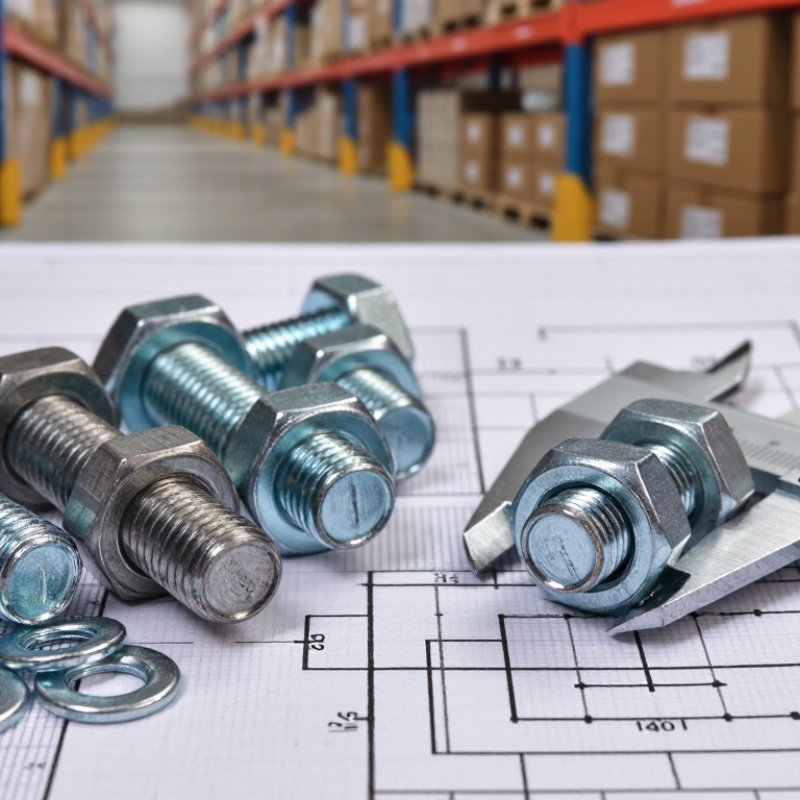
10 Hexagon Head Bolt Buying Tips for Global Buyers
Hexagon head bolts are not one universal product. Type matters before price. Full-thread bolts suit thin joints and adjustable clamping. Partial-thread bolts provide stronger shear resistance across thicker sections. Flange-head bolts spread pressure under the head, reducing washer use. Coarse threads assemble quickly and tolerate minor dirt. Fine threads offer better adjustment and stronger engagement in thin materials. Match the bolt grade with the joint load, temperature, and vibration.
Material changes performance. Carbon steel works for general machinery and structural assemblies. Stainless steel helps resist moisture in food equipment, outdoor frames, and coastal installations. Alloy steel supports demanding mechanical loads, but it needs correct tightening control. Zinc-coated and other protective finishes can improve corrosion resistance. However, coating thickness may change thread fit. Check it.
Global applications require careful specification. Confirm metric or inch dimensions before ordering. Compare thread form, pitch, length, head size, and strength markings. Ask for inspection records, material certificates, and batch traceability. Packaging also matters; mixed sizes can create costly installation delays. I have seen buyers choose by diameter alone, then discover the grip length was wrong. That mistake is easy to prevent. Measure the clamped layers, not just the bolt. Local standards and climate can change the suitable choice. A marine project may need better corrosion protection than an indoor conveyor. Still, no finish lasts forever. Recheck the environment, installation method, and maintenance plan before approving the purchase.
When buying hexagon head bolts globally, confirm the basic size before comparing prices. Record the nominal diameter, bolt length, head dimensions, and thread pitch. Length is measured from beneath the head, not from the top. A small error can leave too little thread engagement. It can also cause unwanted contact inside an assembly.
Thread standards require careful checking. Metric threads commonly follow ISO dimensions, while inch threads may use UNC or UNF specifications. Never match a metric bolt with an inch nut by appearance alone. The threads may seem close, but forced assembly can damage both parts. Ask for a clear thread designation, such as M10 × 1.5 or 3/8-16 UNC. Sample fitting remains useful. Paper specifications do not reveal every production issue.
Strength grade affects safe selection. Metric grades such as 8.8 and 10.9 have different tensile and yield requirements. Check the head marking, material certificate, and batch traceability. Do not assume a darker finish means higher strength. Coatings can also change thread fit and friction. Use compatible nuts and washers, then verify the recommended tightening torque. I have seen buyers focus heavily on grade while overlooking thread length. That choice looked correct on paper, but the joint still lacked reliable engagement. Rechecking the complete fit is slower, yet it prevents expensive surprises.
When buying hexagon head bolts for global projects, match the material to the service environment, not only the quoted price. Carbon steel suits dry indoor assemblies, while stainless steel performs better near moisture, salt, and frequent cleaning. For high loads or elevated temperatures, alloy steel may offer stronger fatigue and tensile performance. However, strength alone does not prevent corrosion.
Check the full exposure picture. Humidity, chemicals, heat cycles, and contact with dissimilar metals can change bolt performance quickly. Zinc-based coatings provide practical protection for many outdoor applications, but damaged surfaces may rust around cut threads or bearing areas. For marine, chemical, or high-temperature service, consider a coating designed for that environment. Confirm its temperature range and hydrogen-related risks where relevant. Small details matter.
Tips: Ask for material certificates, coating thickness records, and test results before approval. Verify thread fit after coating, because excessive thickness can affect installation. Use compatible nuts and washers. Never assume a shiny finish means durable protection. In field inspections, I have seen attractive bolts fail because the coating was selected for appearance, not exposure. That mistake is easy to repeat. Review torque guidance, especially with coated or stainless fasteners, since friction can vary significantly. A controlled sample installation can reveal problems before shipment.
When buying hexagon head bolts across borders, supplier claims are only a starting point. Ask for a recent factory audit, production photos, and the quality manager’s contact details. Confirm that the supplier controls steel receipt, heading, threading, heat treatment, and final inspection. Certifications should match the exact grade, diameter range, coating, and shipment lot. Generic certificates are weak evidence. Request accreditation details, issue dates, and laboratory signatures before approving samples.
Testing must reflect actual service conditions, not just a polished sales sample. For structural or vibration-prone use, review tensile strength, proof load, hardness, thread gauge results, and coating thickness. Ask for corrosion data when the environment demands it. An independent laboratory can retest random pieces from sealed cartons. That small step often exposes mixed batches. Still, testing cannot repair poor process control. One supplier passed a sample review. They could not explain inconsistent lot markings. We should have treated that warning more seriously.
Traceability should follow every bolt from heat number to packing list. Check whether cartons show the lot number, material grade, dimensions, quantity, and inspection status. Match these details with mill certificates and internal inspection records. Keep photographs of markings, sealed cartons, and loading conditions. These records support investigations when a field failure appears months later. Do not rely on paperwork alone. Call the plant, ask specific questions, and compare answers with the documents. A careful buyer may still miss something. Review supplier performance after delivery, not only before payment.
| No. | Buying Tip | What to Verify | Recommended Evidence | Common Warning Signs | Purchasing Record to Keep |
|---|---|---|---|---|---|
| 1 | Define the exact bolt standard | Confirm whether the product is specified to ISO 4014 for partially threaded hexagon head bolts or ISO 4017 for fully threaded bolts. Also define diameter, length, pitch, thread tolerance, head dimensions, and material. | Approved technical drawing, purchase specification, dimensional inspection report, and a clearly identified sample. | The quotation only states “hex bolt” without a recognized standard, thread length, tolerance, or material grade. | Final drawing, standard designation, revision number, approved sample reference, and purchase-order requirements. |
| 2 | Confirm the mechanical property class | For metric carbon and alloy steel bolts, check the specified property class and verify that the requirements align with ISO 898-1, including tensile strength, yield or proof load, elongation, and hardness. | Material test certificate and lot-specific mechanical test report showing the applicable standard, property class, test method, and results. | A high-strength class is claimed without test values, heat-treatment information, or a clear connection between the report and shipment lot. | Specified property class, minimum requirements, actual test results, report number, and lot or heat number. |
| 3 | Check the raw-material origin and grade | Verify steel grade, chemical composition, heat number, and whether the raw material is suitable for the required property class and manufacturing process. | Mill test certificate with heat number, chemical analysis, material grade, and supplier documentation that can be matched to the production lot. | Generic certificates with no heat number, altered documents, incomplete chemistry, or a material grade that does not match the order. | Material grade, heat number, certificate identifier, chemical composition, and certificate-to-lot cross-reference. |
| 4 | Verify the quality-management system | Check whether the supplier operates a documented quality-management system and whether the certificate scope covers fastener manufacturing, processing, or inspection activities relevant to the order. | Current quality-management certificate issued by an accredited certification body, including certificate scope, validity dates, and site address. | Expired certificate, mismatched legal entity or factory address, unclear scope, or a claim that certification guarantees every product. | Certificate number, issuing body, validity period, covered site, scope, and verification date. |
| 5 | Inspect dimensions and thread conformity | Measure nominal diameter, pitch, thread length, head dimensions, bearing surface, chamfer, straightness, and thread fit according to the approved specification. | Dimensional inspection report, calibrated gauges, thread plug or ring gauge records, and sampling plan based on the agreed quality level. | Use of only visual inspection, no gauge records, mixed thread systems, damaged threads, or inconsistent head dimensions. | Inspection equipment identification, calibration status, sample size, measured values, acceptance criteria, and nonconformance disposition. |
| 6 | Review heat treatment and hardness control | For applicable grades, verify quenching, tempering, carburizing, or other heat-treatment controls. Check hardness limits and ensure the process does not create unacceptable brittleness or delayed fracture risk. | Heat-treatment batch record, furnace chart or process record, hardness results, and mechanical test results linked to the same production lot. | Hardness results without lot identification, excessive hardness, missing process records, or unexplained variation between samples. | Heat-treatment batch, furnace or process identifier, test locations, hardness values, operator or inspector, and approval status. |
| 7 | Specify coating and corrosion requirements | Define coating type, thickness, appearance, friction or torque requirements, environmental exposure, and any restrictions on coating processes for high-strength fasteners. | Coating specification, thickness report, process certificate, friction or torque-tension results where required, and corrosion test report such as ISO 9227 when specified. | “Anti-rust” is used without a coating system, no thickness data, white corrosion or blistering, or salt-spray hours presented as a universal service-life guarantee. | Coating system, nominal thickness, test method, lot number, friction requirements, corrosion-test conditions, and acceptance criteria. |
| 8 | Request independent inspection and testing | For critical or high-volume orders, establish pre-shipment inspection, sampling rules, witness points, and independent laboratory testing for dimensions, chemistry, hardness, tensile strength, or coating. | Inspection plan, third-party report, laboratory accreditation details, calibrated equipment records, photographs, and signed release document. | Inspection occurs only after shipment, samples are selected by the supplier without controls, or reports contain no methods, sample identification, or results. | Inspection date, inspector, sampling plan, tested quantities, sample labels, test methods, findings, corrective actions, and release decision. |
| 9 | Confirm regulatory and market documentation | Identify destination-market requirements for chemical substances, restricted materials, packaging, labeling, and declarations. Requirements such as REACH or RoHS may depend on the application and jurisdiction. | Current supplier declaration, material disclosure, safety information where applicable, and documented review against the destination country’s requirements. | A blanket compliance claim with no product scope, no revision date, or no supporting material declaration. | Destination market, applicable regulation, declaration revision, product scope, restricted substances review, and responsible approver. |
| 10 | Build complete lot traceability | Ensure each shipment can be traced from packaging and inspection records back to raw-material heat, manufacturing batch, heat treatment, coating, and final release. | Lot labels, barcode or batch records, material certificates, process records, inspection reports, packing list, and certificate of conformity with matching identifiers. | Mixed lots in one package, missing labels, certificates that cannot be matched to cartons, or records that are unavailable after shipment. | Purchase order, supplier lot, heat number, production batch, coating batch, carton number, quantity, inspection status, and shipment date. |
For global buyers, a hexagon head bolt is not priced by unit cost alone. I compare steel grade, thread tolerance, surface treatment, inspection, and replacement risk. A low quote can become expensive after duties, inland transport, and port charges. Request a full landed-cost sheet before approving production.
Packaging affects both protection and freight efficiency. Strong cartons, internal dividers, and moisture-resistant liners reduce thread damage during long sea journeys. Yet excessive packaging increases volume and disposal costs. Ask for carton dimensions, gross weight, pallet details, and container loading estimates. Small changes can save hundreds of dollars.
Shipping terms must be understood clearly. Confirm the delivery point, insurance responsibility, and customs documentation. Check the tariff classification, commercial invoice, packing list, origin details, and required conformity papers with a qualified broker. Import rules vary by destination and product specification. Our first estimate was wrong because port storage was excluded. That mistake changed the real cost. Leave room for delays. Also, review sample packaging before placing a large order. It is easy to overlook weak cartons when everything looks fine on paper.
Full-thread bolts suit thin joints and adjustable clamping. Partial-thread bolts can improve shear resistance across thicker sections. Measure the joint carefully.
Coarse threads assemble quickly and tolerate minor dirt. Fine threads provide better adjustment and stronger engagement in thin materials. The wrong pitch can waste installation time.
Stainless steel generally handles moisture, salt, and frequent cleaning better. Carbon steel suits many dry indoor assemblies. Alloy steel supports demanding loads, but strength does not prevent corrosion.
Match the coating to humidity, chemicals, heat cycles, and salt exposure. Check its temperature range and thickness records. A shiny surface proves very little.
Yes. Excess coating may reduce thread clearance and make assembly difficult. Test a coated bolt with its compatible nut before shipment. Small checks prevent large delays.
Confirm metric or inch sizing, thread pitch, length, head size, and strength markings. Measure the clamped layers, not only the bolt diameter. Grip length is easy to overlook.
Request material certificates, inspection records, coating tests, and batch traceability. Check conformity papers required at the destination. Paperwork can reveal problems early.
Include inspection, coating, packaging, duties, inland transport, port charges, and replacement risk. Request a full landed-cost sheet. A low quote fooled us once.
Strong cartons, dividers, and moisture-resistant liners help protect threads. Also request carton dimensions, gross weight, pallet details, and loading estimates. Weak cartons create expensive surprises.
Confirm delivery responsibilities, insurance, customs documents, and tariff classification with a qualified broker. Review sample packaging before bulk production. Everything can look fine on paper.
Buying the right Hexagon Head bolt requires more than comparing prices. Global buyers should first understand the bolt types and applications involved, then confirm dimensions, thread standards, strength grades, and fit with the intended assembly. Material and coating selection should reflect service conditions such as moisture, heat, corrosion, vibration, and chemical exposure. These choices directly affect durability, safety, maintenance needs, and overall product performance.
Before placing an order, evaluate the supplier’s quality controls, certifications, inspection procedures, test reports, and traceability systems. It is also important to compare total cost rather than unit price alone, including packaging, shipping, customs documentation, import requirements, and possible replacement expenses. Clear technical specifications, consistent communication, and suitable packaging can help prevent delays, compatibility problems, and unexpected costs. A careful purchasing process ensures that the selected bolts meet both operational requirements and applicable market standards.
