
Ningyuan Fastener Ningyuan Fastener

How to Source Long Screws Globally in 2026?

Time:2026-10-27 Author:Aria
0%

Sourcing Long Screws globally in 2026 requires more than comparing online prices. Buyers must verify dimensions, materials, thread accuracy, coatings, packaging, and production capacity. A screw that looks correct in a catalog may fail during installation. Small differences matter.

This guide reflects practical sourcing concerns from supplier screening and hardware procurement. It explains how to define specifications, locate qualified manufacturers, request samples, and compare total landed costs. Pay close attention to diameter, length tolerance, thread type, head design, tensile strength, and corrosion resistance. For outdoor applications, zinc plating may not provide enough protection. Stainless steel or another tested coating could be more suitable.

Supplier evidence matters. Request material certificates, inspection reports, production photos, and recent customer references. Confirm whether testing follows recognized standards, such as ISO, ASTM, or equivalent national requirements. Independent inspections can reveal mixed batches, damaged threads, or inaccurate counts before shipment. They cost money. They can also prevent larger losses.

Global purchasing adds practical risks. Freight schedules change. Exchange rates move. Import duties differ by destination. Packaging must protect long shafts from bending during transit. A strong carton with internal dividers may be necessary. Do not trust promises alone. Put tolerances, quantities, inspection rules, delivery dates, and remedies in writing.

No sourcing plan is perfect. A supplier may pass an audit and still struggle with urgent production changes. Buyers should keep backup suppliers and review performance after every order. The goal is not simply to find the cheapest Long Screws. It is to build a reliable, traceable, and legally compliant supply route that performs consistently in real applications.
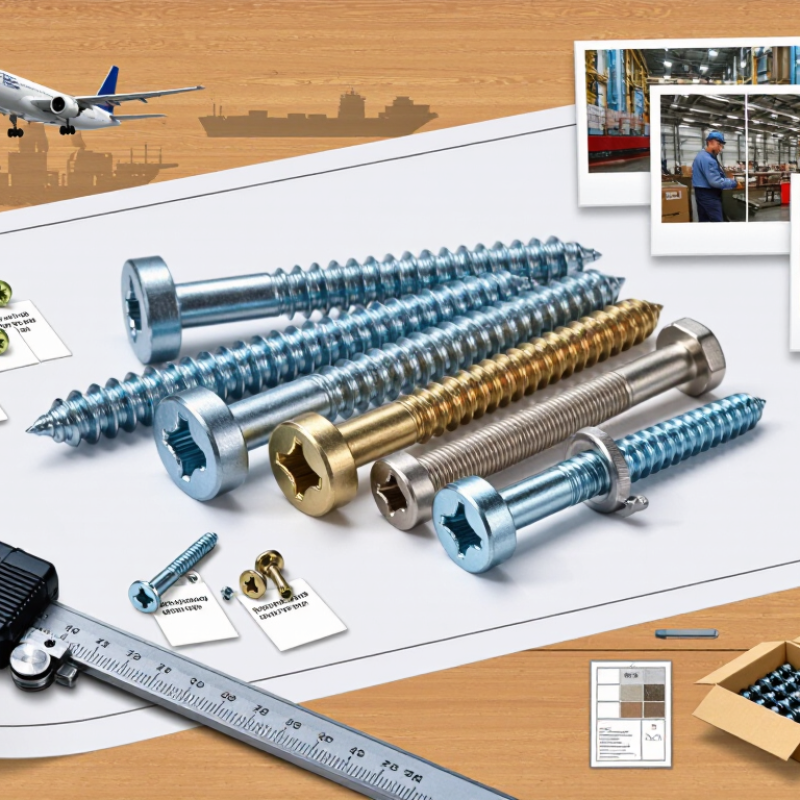
How to Source Long Screws Globally in 2026?

Define Long Screw Specifications and Global Sourcing Requirements

How to Source Long Screws Globally in 2026?

Define Long Screw Specifications and Global Sourcing Requirements

Long screws should never be defined only by total length. Specify diameter, length under the head, thread pitch, thread length, point style, drive type, and head geometry. Include the material grade, surface treatment, hardness, and allowable dimensional tolerance. For example, a 6 × 180 mm screw needs a clear reference to its 6 mm diameter and 180 mm length. Otherwise, suppliers may measure length differently.

Global steel supply remains a major sourcing factor. The World Steel Association reported approximately 1.89 billion tonnes of crude steel production in 2023. That scale supports broad supply, but it does not guarantee consistent screw quality. A reliable request for quotation should include a controlled drawing, applicable standards such as ISO 898-1, inspection requirements, and sample approval. Ask for material certificates, mechanical test results, coating details, and batch traceability. Small details matter.

Packaging also needs definition. Long screws can bend, tangle, or damage their threads during transport. Specify bundle size, protective separators, carton limits, labeling, and moisture protection. Confirm the delivery term, inspection point, and document language before ordering. I would not rely on catalog images alone. They often hide thread differences. A common weakness is assuming one approved sample represents every future batch. It may not. Recheck critical dimensions before mass production and record deviations openly.

How to Source Long Screws Globally in 2026?

ISO Metric Long-Screw Specifications and Global Sourcing Requirements

This chart compares common ISO metric thread sizes used for long screws. The estimated proof load is calculated from ISO 898-1 tensile-stress areas using a property class 8.8 proof stress of approximately 580 MPa. Actual performance depends on length, thread engagement, geometry, heat treatment, surface finish, and test results.

For global sourcing, define the nominal diameter, total length, coarse-thread pitch, fully or partially threaded design, material and property class, corrosion-protection requirements, applicable ISO or equivalent standard, dimensional tolerances, packaging, inspection requirements, and required certificates before requesting quotations.

Identify Suitable International Suppliers and Manufacturing Regions

Sourcing long screws in 2026 starts with defining the application, not searching by length alone. A 300 mm structural screw needs different controls than a long machine screw. Record diameter, thread form, drive type, strength class, corrosion exposure, and head geometry. Include a technical drawing with clear tolerances. A verbal description is risky. Ask suppliers for material certificates, dimensional reports, and coating specifications. Require samples from normal production, not hand-finished pieces. Samples reveal reality.

Suitable manufacturing regions depend on process complexity, capacity, and delivery routes. East Asia offers strong cold-heading, thread-rolling, and surface-treatment capabilities. South Asia can provide competitive production for standard fasteners, but process verification remains essential. Central and Eastern Europe may suit buyers needing shorter transit, documented quality systems, and closer engineering communication. Regional reputation is not enough. Review machinery lists, export records, inspection procedures, tooling control, and production capacity. Request a remote factory tour or an independent audit. I would avoid choosing only by the lowest quotation.

For each candidate, compare landed cost, including tooling, minimum order quantity, inspection, freight, duties, and protective packaging. Long screws can bend during transport, so bundled packing and rigid separators deserve attention. Start with a controlled pilot order of 200 to 500 pieces. Test thread fit, hardness, straightness, torque, and coating adhesion against the agreed specification. Keep retained samples and batch records. I once underestimated packaging costs on a long-part shipment; the saving disappeared quickly. That mistake still deserves review.

Compare Materials, Standards, Pricing, and Production Capabilities

How to Source Long Screws Globally in 2026?

Long screws require more than a low unit price. A 300 mm screw can bend during production, shipping, or installation. Compare carbon steel, stainless steel, and alloy steel by strength, corrosion resistance, and application. Stainless steel suits humid environments, while alloy steel supports demanding structural loads. Confirm dimensions, thread type, tensile class, and surface finish. Common references include ISO 898-1, ISO 3506, and relevant ASTM specifications. Standards must match the installation market.

Production capability matters as much as material selection. Ask whether the supplier uses cold heading, thread rolling, controlled heat treatment, and straightness inspection. Request sample measurements, batch reports, and photographs of long-threaded parts. A reliable factory should explain its maximum diameter, length, tooling limits, and monthly capacity. I have seen attractive quotations fail because the supplier outsourced heat treatment. That detail changed both timing and quality.

Tips: Compare complete landed costs, not only the screw price. Include tooling, testing, packaging, freight, duties, and payment terms. Request quotations for several volumes, such as 1,000, 10,000, and 50,000 pieces. Small orders may carry heavy tooling costs. Also check production lead time during peak seasons. A lower-cost finish may look acceptable, but it can require earlier replacement. Recheck every assumption.

Verify Supplier Quality, Compliance, Samples, and Factory Reliability

How to Source Long Screws Globally in 2026?

Long screws require more than a competitive quotation. Start by checking the supplier’s production experience with similar lengths, diameters, threads, and materials. Ask for recent inspection records, process controls, and traceability documents. A reliable factory should identify steel heat numbers and production dates. Vague answers deserve caution.

Request samples before approving any order. Measure diameter, thread pitch, length, head dimensions, and straightness with calibrated tools. Test hardness, tensile strength, torque, and coating thickness when the application requires them. Check for damaged threads after transport. Samples should match the proposed mass-production process, not a specially prepared batch. That difference matters. Ask for a written sample approval record.

Compliance must cover the destination market and the product’s actual materials. Obtain material declarations, restricted-substance information, and applicable test reports. Confirm packaging, labeling, and documentation requirements with an experienced compliance professional. Do not rely on an old certificate. Standards and customer requirements can change. Factory reliability also needs physical evidence, such as maintenance logs, calibration records, worker training, and backup plans for plating or heat treatment. A video tour helps, but it cannot replace an audit. I have seen polished sample rooms hide weak final inspection. My own checks are not perfect either, especially when translation slows technical discussions. Build in time for repeat testing, corrective actions, and an independent inspection before shipment.

Manage Global Orders, Shipping, Customs, and Supply Chain Risks

How to Source Long Screws Globally in 2026?

Long screws require more than a low unit price. Confirm diameter, length, thread pitch, head style, steel grade, coating, and tensile requirements before requesting quotations. A 2-millimeter length error can stop assembly on an entire production line. Request inspection samples and dimensional reports from each supplier.

Shipping deserves equal attention. UNCTAD’s Review of Maritime Transport 2024 reports that maritime transport carries over 80% of global merchandise trade. Port congestion, route changes, and container shortages can therefore affect even small hardware orders.

Compare air, ocean, and consolidated freight using landed cost, not freight price alone. Specify moisture barriers, edge protection, and carton limits for long screws, because bent parts are difficult to detect externally.

Customs data must be prepared early. Confirm the correct HS classification, country of origin, commercial invoice details, and material description with a qualified customs adviser. The World Bank’s Logistics Performance Index 2023 shows major differences in international shipping reliability between economies.

Build dual-source options and keep safety stock near the production site. I usually add a two-week schedule buffer, although it still feels imperfect.

A spreadsheet can look precise and be wrong. Track supplier capacity, inspection results, booking dates, customs status, and delivery exceptions in one controlled record. Recheck these assumptions whenever regulations, routes, or order volumes change.

FAQS

What details should be defined before sourcing long screws?

Record diameter, length, thread form, drive type, strength class, head shape, and corrosion exposure. A drawing with tolerances is essential. Verbal descriptions can create expensive misunderstandings.

Which manufacturing regions may suit long screw production?

East Asia often supports cold heading, thread rolling, and surface treatment. South Asia may suit standard fasteners with careful process checks. Central and Eastern Europe can offer shorter transit and closer engineering communication. Location alone proves little.

How can a buyer compare suppliers fairly?

Review machinery, tooling control, inspection procedures, capacity, and similar production experience. Request a remote factory tour or independent audit. Do not choose only the lowest quotation. That choice can age badly.

What materials are suitable for different applications?

Carbon steel may suit general use. Stainless steel helps in humid or corrosive environments. Alloy steel can support demanding structural loads. Confirm strength, corrosion resistance, thread requirements, and surface finish together.

What production capabilities should suppliers demonstrate?

Ask about cold heading, thread rolling, heat treatment, and straightness inspection. The supplier should state maximum diameter, length, tooling limits, and monthly capacity. Outsourced heat treatment may affect quality and timing. Check it carefully.

What should be included in the total cost?

Include tooling, minimum order quantities, testing, packaging, freight, duties, and payment terms. Compare quotations at several volumes, such as 1,000, 10,000, and 50,000 pieces. A cheap screw can become costly after shipping.

How should samples be tested before mass production?

Use samples from normal production, not hand-finished pieces. Measure diameter, pitch, length, head dimensions, and straightness with calibrated tools. Test hardness, tensile strength, torque, and coating adhesion when necessary. Keep approval records and retained samples.

How can long screws be protected during shipping?

Long screws may bend inside loose cartons. Use bundled packing, rigid separators, and protective packaging. Inspect threads after transport. I once underestimated packaging costs, and the expected saving disappeared. Recheck that assumption.

Conclusion

Sourcing Long Screws globally in 2026 requires a structured approach that begins with clearly defining technical specifications, including length, diameter, thread type, material, strength grade, surface treatment, tolerances, and intended application. Buyers should also establish order quantities, target costs, delivery expectations, packaging needs, and required certifications before contacting suppliers. International manufacturing regions can then be evaluated according to production expertise, capacity, labor costs, material availability, and export experience. Comparing suppliers on standards, pricing, customization options, tooling capabilities, and lead times helps identify the best overall fit rather than focusing only on the lowest price.

Before placing an order, buyers should verify quality systems, compliance documents, factory reliability, inspection procedures, and sample performance. A small trial order can reveal production consistency and communication effectiveness. Successful global procurement also depends on carefully managing payment terms, production schedules, shipping methods, customs documentation, insurance, inventory planning, and contingency options. Regular communication and risk monitoring can reduce delays, quality problems, unexpected costs, and supply interruptions throughout the purchasing process.

Aria

Aria

Aria is a dedicated marketing professional with a deep passion for innovative strategies and a keen understanding of our company's product offerings. With a wealth of experience in the industry, Aria excels at crafting engaging content that highlights the unique features and benefits of our......