
Ningyuan Fastener
In global industrial applications, small components can determine whether equipment feels practical or frustrating. Thumb Screws offer tool-free adjustment when operators need speed, repeatability, and controlled access. Their knurled heads provide a firm grip, even when gloves are worn. That detail matters beside machine guards, inspection panels, and modular fixtures. In my experience, operators value hardware that reduces lost tools and unnecessary downtime. However, convenience should never replace proper engineering judgment. A thumb screw is not automatically suitable for every load, temperature, or vibration condition.
Material selection deserves careful attention. Stainless steel can support corrosion-resistant assemblies, while engineered plastics may reduce weight and protect delicate surfaces. Thread size, length, head shape, and clamping force must match the application. Poor sizing can loosen during vibration or damage a panel. That risk is easy to underestimate. Reliable manufacturers provide dimensional data, material information, and quality documentation for professional evaluation. Global purchasing teams also need consistent specifications across suppliers and production sites. This supports maintenance planning and clearer quality control.
The best choice depends on the environment. A clean laboratory fixture may need different performance than a packaging line or outdoor enclosure. Engineers should test torque, wear, temperature exposure, and repeated operation before broad deployment. Standards and supplier records can guide the process, but field feedback remains valuable. Sometimes, the first design is not the best design. Careful observation can reveal better grip, spacing, or thread engagement. With practical testing and responsible sourcing, Thumb Screws can become dependable details within larger industrial systems.
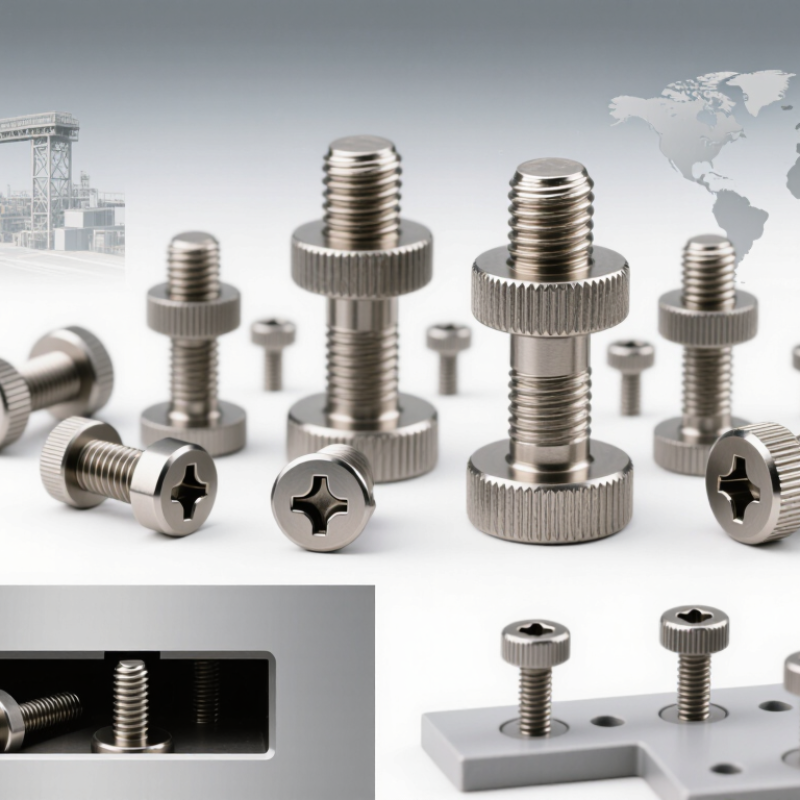
Thumb screws are fasteners designed for hand operation. Their enlarged, textured heads provide grip without a wrench or screwdriver. A threaded shaft enters a tapped hole, clamp, or panel insert. Turning the head clockwise draws parts together, while counterclockwise turning releases them. This simple action supports frequent access in equipment cabinets, inspection covers, laboratory fixtures, and production lines.
Their value is practical, not mysterious. An operator wearing work gloves can often loosen a properly sized thumb screw beside a control panel. The screw also reduces tool handling and helps prevent misplaced hardware during routine servicing.
Materials and finishes must match the environment. Stainless steel suits humid areas, while plated steel may fit drier indoor machinery. Thread size, engagement length, and load matter. A thumb screw is convenient, but it is not automatically a high-load fastener.
Tips: Match the thread to the mating insert, and test it by hand before applying force. Keep at least two full threads engaged when possible. Clean dust from the threads, especially around sliding panels. Avoid over-tightening; finger pressure can still damage soft plastic or thin sheet metal. In field use, operators may blame the screw when misalignment causes the problem. That mistake is easy to repeat. A small washer may protect painted surfaces, although it can change the clamping height. Check vibration levels too, because hand-tightened hardware may need a locking feature in demanding equipment.
Why Choose Thumb Screws for Global Industrial Applications?
Thumb screws suit global industrial applications because they simplify adjustments without requiring a separate tool. A technician can loosen a panel by hand, even during routine maintenance in a busy workshop. This saves small amounts of time repeatedly. Those seconds can matter across many service points.
Their value also depends on correct engineering. Select thread size, material, head shape, and clamping force for the equipment. Stainless steel can support humid environments, while coated steel may suit dry indoor machinery. Knurled heads improve grip, especially when workers wear gloves. However, a larger head does not automatically provide better performance. Excessive hand force can damage threads or deform thin panels.
Global equipment faces changing temperatures, dust, vibration, and maintenance habits. Thumb screws help standardize access across locations, but they are not suitable for every joint. High vibration may require a locking feature or a different fastener design. That detail is easy to overlook. Clear installation guidance also improves reliability when teams speak different languages or follow different procedures. Engineers should verify torque, corrosion resistance, and relevant local requirements before production. Field feedback deserves attention too. A fastener that feels convenient in one factory may become awkward in another. Small design reviews can prevent costly adjustments later.
| Application Dimension | How Thumb Screws Help | Typical Material or Finish | Important Selection Consideration | Global Industrial Benefit |
|---|---|---|---|---|
| Tool-Free Adjustment | Large heads provide a gripping surface for tightening and loosening by hand, reducing the need for a separate wrench or screwdriver. | Metal threaded body with a knurled, wing, lobed, or molded head. | Choose a head shape that provides sufficient grip without interfering with nearby components. | Faster routine access |
| Frequent Access Panels | Suitable for guards, inspection covers, service panels, and enclosures that must be opened regularly. | Stainless steel for corrosion resistance or carbon steel with a protective coating for general industrial use. | Confirm the required thread size, thread pitch, clamping length, and panel thickness. | Reduced maintenance time |
| Corrosion Exposure | Corrosion-resistant materials help maintain function in humid, washdown, outdoor, and light chemical-exposure environments. | Common options include stainless steel grades such as 304 or 316, depending on the environment. | Grade 316 generally offers better resistance to chlorides than grade 304, but the complete assembly must also be evaluated. | Adaptable material choice |
| Vibration and Shock | Thumb screws can provide practical hand clamping, but they may require a locking feature where vibration could loosen a threaded fastener. | Threaded metal body with a captive washer, locknut, nylon patch, or other suitable retention method when specified. | Do not rely on hand tightening alone for safety-critical or heavily vibrating joints. | Application-specific reliability |
| Ergonomic Handling | Rounded or contoured heads can be more comfortable for repeated manual operation than small tool-driven fastener heads. | Molded thermoplastic head, metal head, or a hybrid metal-and-polymer construction. | Consider hand clearance, operating temperature, chemical compatibility, and operator glove use. | Improved operator usability |
| Clean and Controlled Assembly | Tool-free operation can reduce the number of loose tools used near machinery, equipment interiors, and production lines. | Smooth or corrosion-resistant surfaces selected for the cleanliness requirements of the application. | For hygienic or contamination-sensitive environments, specify suitable surface finish and cleanability requirements. | Simplified workstation control |
| Standardized Replacement | Metric and inch-based thread systems are available, supporting replacement planning across different equipment fleets. | Common thread forms include metric coarse threads and Unified inch threads. | Match the thread standard exactly; similar-looking metric and inch threads are not interchangeable. | Easier international sourcing |
| Captive Hardware Requirements | Captive designs keep the screw attached to the panel or assembly when loosened, helping prevent loss during servicing. | Captive screw with an integrated or separately retained washer. | Verify the panel hole, retention method, available travel, and required captive length. | Lower hardware loss risk |
| Load and Clamping Needs | They are effective for many light- to moderate-duty clamping tasks where repeated manual adjustment is more important than maximum preload. | Steel or stainless steel threaded shank with a head sized for the intended hand torque. | Use a conventional high-strength fastener when the joint requires controlled preload, high tensile load, or certified structural performance. | Clear engineering boundaries |
| Environmental Temperature | Material selection can be adjusted for ambient temperature, heat exposure, and thermal cycling. | Metal heads are generally preferred for higher temperatures; polymer heads require a specified temperature range. | Check the temperature rating of the head, thread material, coating, and any washer or locking element. | Flexible specification |
Thumb screws suit global industrial applications because they allow quick adjustment without tools.
Their reliability, however, depends on material selection and head design. Operating temperature, moisture, vibration, and chemical exposure should guide every choice.
For humid or coastal equipment, 316 stainless steel offers stronger chloride resistance than common 304 stainless steel. ISO 3506-1 provides mechanical property requirements for corrosion-resistant stainless fasteners.
The NACE IMPACT study estimated global corrosion costs at 3.4% of worldwide gross domestic product. That figure makes material selection more than a purchasing detail. It is a maintenance decision.
For dry machinery, zinc-plated carbon steel can reduce cost while providing practical protection. Yet damaged plating exposes the base metal quickly. A small scratch can become a larger maintenance issue.
Design also changes performance. Knurled heads support firm grip with gloves, while wing heads suit frequent tool-free adjustments. Captive thumb screws prevent loose parts from entering compact assemblies.
Nylon versions reduce electrical conductivity and surface damage, but they lose strength at elevated temperatures. The Plastics Industry Association reports that nylon properties vary significantly with moisture absorption, which engineers should not ignore.
Low-profile heads save space, but they may provide less torque. That trade-off is easy to miss. Vibration testing under the actual assembly load remains wiser than relying only on catalog ratings.
Even a corrosion-resistant screw can fail when mismatched with dissimilar metals or over-tightened repeatedly.
Thumb screws simplify installation when operators need frequent, tool-free access. Their knurled heads provide a firm grip, even with work gloves or oily fingers. No special tool is needed. That matters beside control cabinets, inspection covers, and adjustable machine guards.
In practical maintenance work, a thumb screw can shorten access time and reduce misplaced tools. Operators can remove a cover, inspect a filter, and secure it again within minutes. The threaded connection also supports repeatable adjustment for guides, sensors, and fixtures. However, hand tightening is not suitable for every joint. High vibration, heavy loads, or safety-critical connections may require a specified torque and a locking method.
Material selection affects reliability. Stainless steel resists moisture and cleaning chemicals, while plated steel may suit dry indoor equipment. Thread size, pitch, head shape, and clearance should match the surrounding design. A large head helps with grip, but it can interfere with nearby moving parts. Engineers should also check burrs, cross-threading, and uneven contact during installation. Small details matter.
Routine inspections should look for looseness, damaged threads, corrosion, and worn knurling. In harsh environments, operators may need shorter inspection intervals. A simple hand check can reveal problems, although it should not replace documented maintenance procedures. Thumb screws improve access and adjustment, but only when their limits are understood and respected.
Why Choose Thumb Screws for Global Industrial Applications?
For global industrial use, thumb screws offer tool-free adjustment during assembly, inspection, and maintenance. Their broad, knurled heads improve grip when operators wear gloves. Standards still matter. Metric and imperial threads are not interchangeable, even when their diameters appear similar. Check thread pitch, head dimensions, material grade, and surface treatment against current ISO, ASME, or regional specifications. Requirements can vary by industry and destination. A readable certificate of conformity and batch traceability also support reliable purchasing.
Tips: Confirm the thread system first. Request samples before volume orders. Test torque, fit, and repeated adjustment under real conditions. Do not rely on a catalog image alone.
Selection should reflect the working environment. Stainless steel suits humid areas, while coated steel may support cost control in less aggressive conditions. Consider vibration, hand clearance, temperature, expected load, and cleaning chemicals. A screw that feels comfortable may still loosen under vibration. That detail is easy to miss. In my view, simple torque and cycle tests are more useful than assumptions based on appearance. However, testing only one sample can create false confidence.
International supply adds another layer. Ask suppliers about minimum order quantities, production capacity, packaging, export documents, and realistic lead times. Keep drawings and revision numbers synchronized across purchasing teams. Dual sourcing may reduce disruption, but different suppliers can interpret tolerances differently. Compare inspection reports carefully. Small inconsistencies can become expensive during final assembly. A flexible specification helps, but excessive flexibility weakens quality control.
Standards, selection factors, and international supply considerations
Typical nominal sizes used when specifying manually operated fastening components
Reference basis: ISO metric coarse thread designations commonly listed in ISO 261 and ISO 724. Values show pitch in millimetres.
Select the correct thread system, nominal diameter, pitch, tolerance, and material specification. Metric and unified-inch threads should not be mixed.
Thumb screws are useful where frequent tool-free access is required. Consider grip style, head diameter, installed clearance, load, vibration, and corrosion exposure.
Use complete dimensional drawings, standardized part descriptions, inspection requirements, packaging details, and traceability records to reduce cross-border specification errors.
They allow hand adjustments without a separate tool. A technician can open a panel quickly during routine maintenance. Small time savings accumulate across many service points.
Check thread size, material, head shape, and required clamping force. The biggest head is not always the best choice. Excessive force may damage threads or thin panels.
Corrosion-resistant stainless steel suits humid areas and chloride exposure. A higher-grade stainless option may resist corrosion better than common stainless steel. Inspect scratches because exposed metal can deteriorate quickly.
Coated carbon steel can suit dry indoor machinery. It often reduces cost while providing useful protection. However, damaged coating exposes the base metal. Small scratches deserve attention.
Knurled heads improve grip when workers wear gloves. Wing heads support frequent hand adjustments. Low-profile heads save space but may provide less turning force.
Not always. High vibration may loosen them or reduce clamping reliability. Consider a locking feature or another fastener design. Testing the actual assembly is wiser than trusting catalog ratings alone.
Nylon versions reduce electrical conductivity and surface damage. They may suit lightweight, temperature-controlled applications. Moisture can change nylon properties. Elevated temperatures can also reduce its strength.
Provide clear installation guidance with simple diagrams and measured tightening instructions. Teams may use different procedures. Field feedback can reveal awkward designs that seemed convenient elsewhere. That review may be imperfect, but it prevents costly changes later.
Thumb Screws are manually operated fastening components designed for quick installation, adjustment, and removal without requiring specialized tools. Their ergonomic heads provide a secure grip, making them especially useful in industrial equipment, machinery panels, fixtures, enclosures, and applications requiring frequent access. By simplifying assembly and maintenance, they can reduce downtime and improve operational efficiency across different working environments.
Their suitability for global industrial applications depends on selecting the right material, head style, thread specification, surface treatment, and resistance to temperature, moisture, chemicals, or vibration. Stainless steel, steel, and engineered materials may serve different operating conditions and durability requirements. Buyers should also consider dimensional standards, load capacity, compatibility with mating components, quality consistency, packaging, documentation, and international supply capabilities. With careful selection, Thumb Screws offer a practical balance of convenience, reliability, and long-term serviceability.
