 Ningyuan Fastener
Ningyuan Fastener
Ningyuan Fastener
Advanced Industrial Anchoring and Mounting Components Manufactured for Optimal Structural Load Capacities
Decades of Engineering Mastery, Precision Metallurgical Processes, and Certified Operational Scale
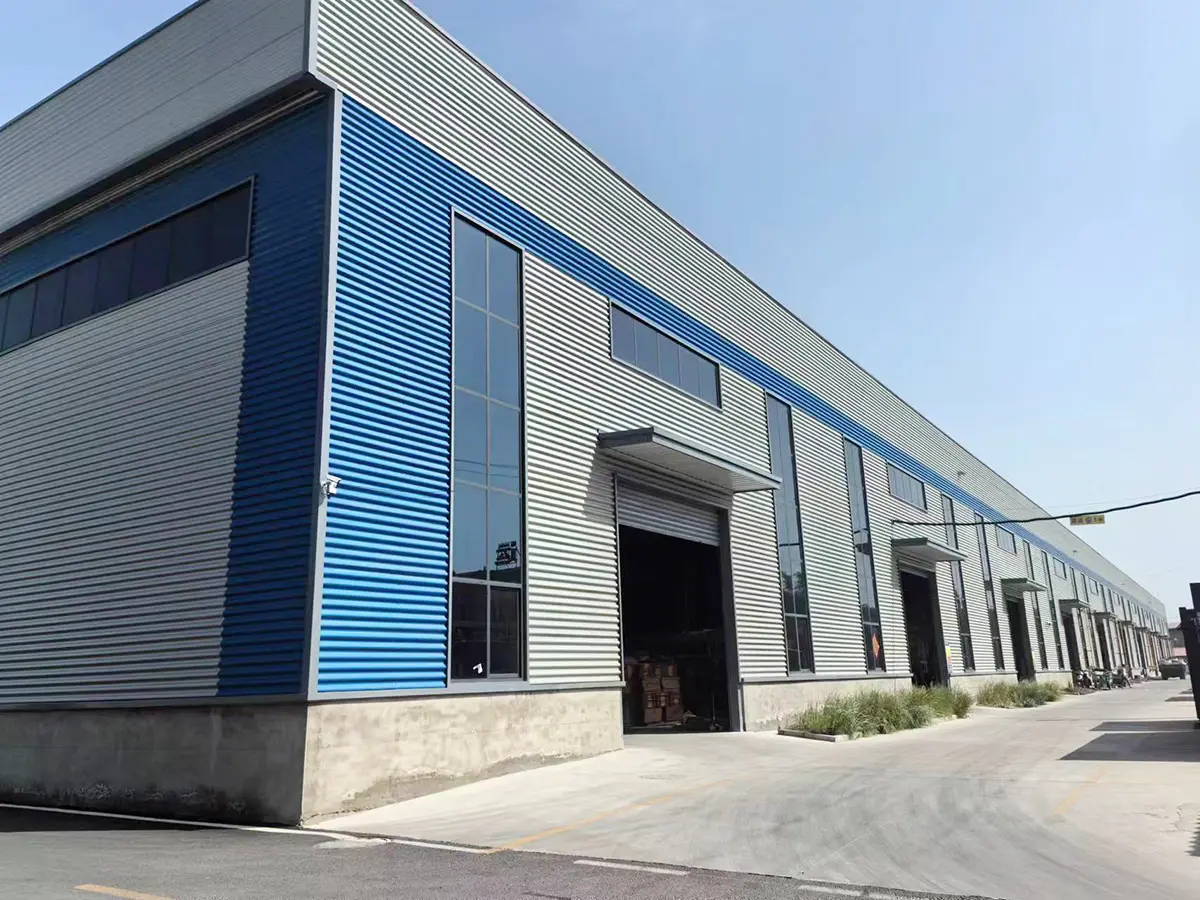
Founded in 2005 (formerly operating as Jin Langtao), Handan Ningyuan Fastener Manufacturing Co., Ltd. has established itself as an industry benchmark, located in Handan Yongnian, which is widely recognized as the fastener manufacturing capital of China. From its inception, the company has operated under a strict technical directive: that growth is driven by manufacturing innovation, and durability is verified by physical testing. We began as a specialist manufacturer of high-end mechanical fasteners and customized photovoltaic (PV) mounting system components. Through close to two decades of technological integration, Ningyuan has evolved into a global leader in high-performance grounding systems, anchoring components, and architectural seismic structures.
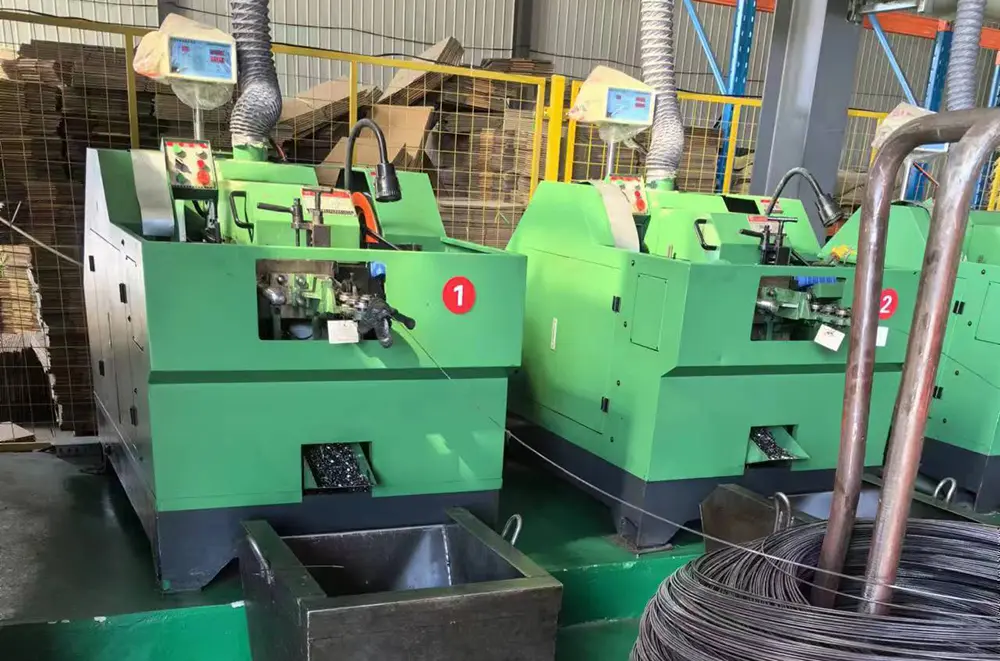
Our expansive 20,000-square-meter modern manufacturing facility houses over 50 advanced cold-heading, hot-forging, thread-rolling, and surface-treatment equipment arrays. Operating under a rigorous quality control framework, our technical team consists of veteran materials engineers and mechanical designers specializing in structural stress simulation, metal fatigue testing, and environmental corrosion analysis. With an annual sales footprint exceeding 70 million RMB, we partner with key engineering groups, EPC contractors, and global distributors across Europe, North America, the Middle East, and Asia-Pacific to deliver premium-grade hardware suited for the most demanding geotechnical environments.
Quantifiable Capabilities Demonstrating Global Supply Security and Quality Management Systems
The global demand for spiral ground piles (also referred to as screw piles, helical anchors, or ground screws) has witnessed exponential growth. This increase is primarily driven by the transition toward large-scale renewable energy infrastructure and the critical need to optimize the Levelized Cost of Energy (LCOE). Procurement executives representing EPC contractors, infrastructure funds, and utility scale solar projects are increasingly prioritizing foundational structures that offer rapid deployment, zero environmental remediation requirements, and certified load-bearing reliability.
In high-capacity utility projects, traditional concrete foundation methodologies present several limitations, including prolonged curing cycles, significant site disruption, and massive carbon footprints. Conversely, hot-dip galvanized spiral ground piles are engineered to be driven directly into the ground, achieving full load capacity immediately. This reduction in labor hours and construction duration mitigates key risks for developers working within tight scheduling windows. To meet these specifications, global procurement matrices assess ground piles based on mechanical steel grades, wall thickness uniformity, weld penetration consistency, and zinc coating thickness, ensuring the system survives its designated 25-to-30-year operational life cycle.
A ground screw foundation is not a simple commodity; it is a highly engineered geotechnical interface designed to transfer static, dynamic, and environmental loads deep into the soil. Depending on the geographical zone, soil types vary from loose, sandy materials to high-plasticity clays and dense, rocky terrain. Handan Ningyuan addresses these varied demands with tailored technical solutions. In low-cohesion sandy soil profiles, we manufacture ground screws featuring multi-helix profiles and extended blade pitches. This design maximizes both skin friction and end-bearing capacity. For heavy clay structures, we supply optimized single-blade configurations designed to minimize soil disturbance during torque application.
Additionally, macro-level industrial utility projects demand seamless structural integration with various mounting configurations. Whether projects utilize single-axis tracking solar systems, multi-row fixed racking structures, or temporary industrial housing, our ground screws are designed to connect directly with specialized structural transitions. By optimizing the flange-plate layouts, thread patterns, and steel sleeve designs, we ensure the structural loads are distributed efficiently. This protects the mounting systems from uneven settling, frost heave forces, and wind-shear lift forces.
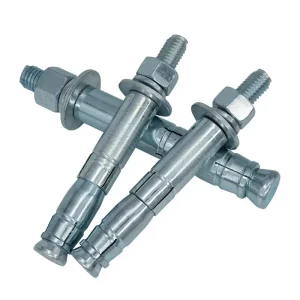
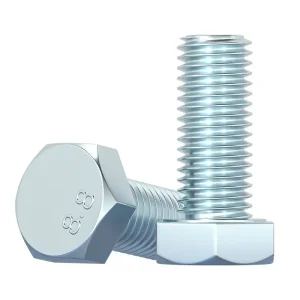
Tailored structural anchoring for ground-mount solar arrays, optimizing mechanical response under high wind loads.
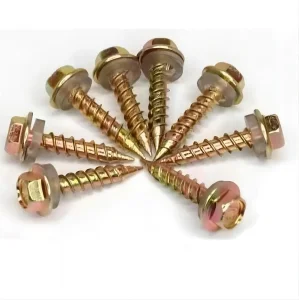
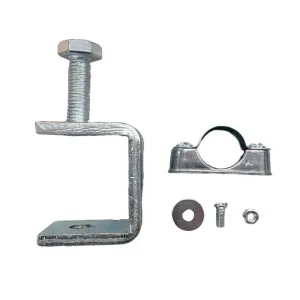
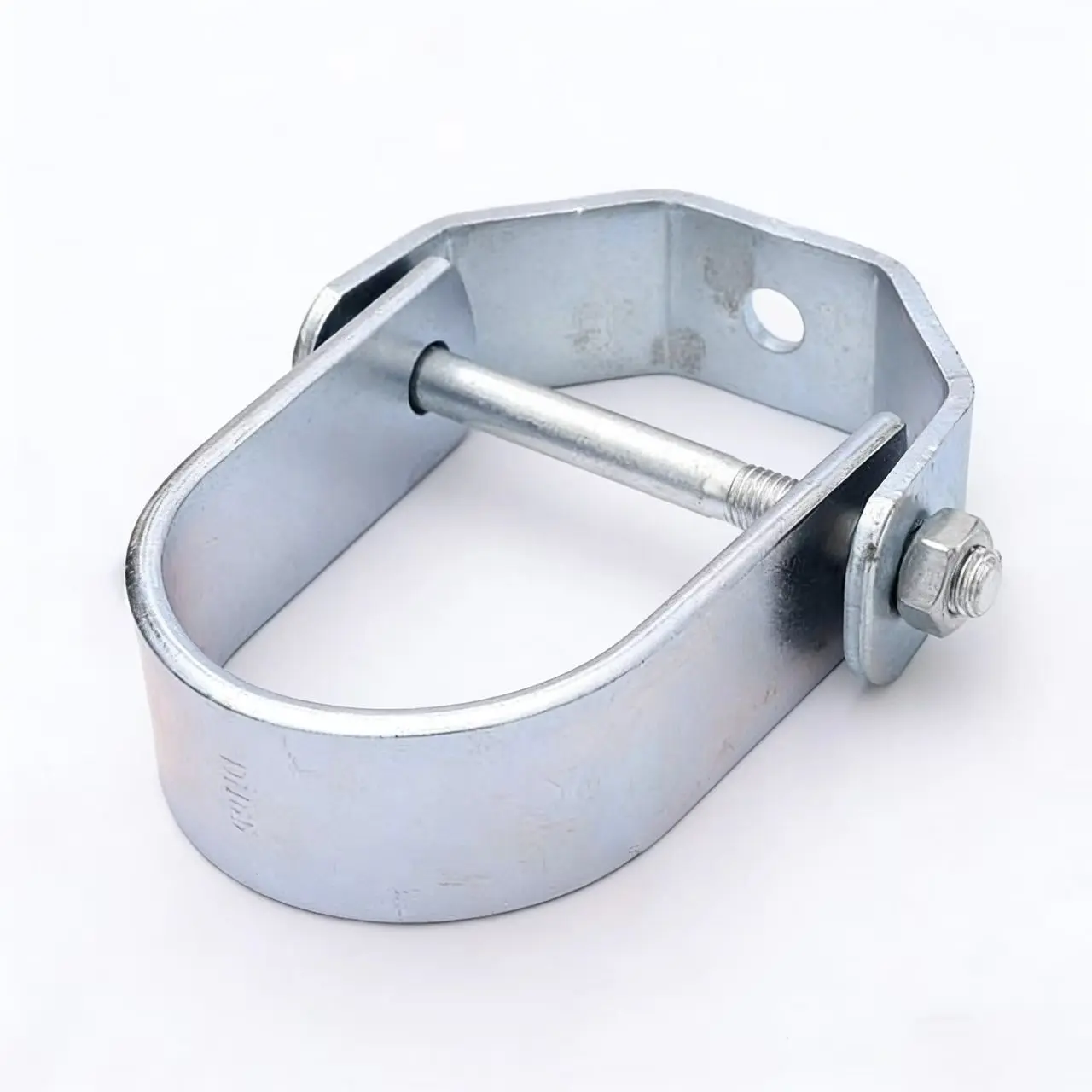
Heavy-duty connections and hangers certified for high-seismic zones and vibration damping applications.
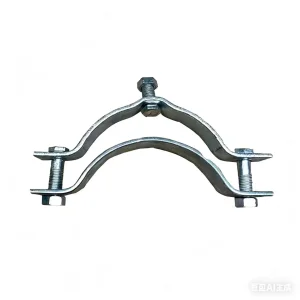
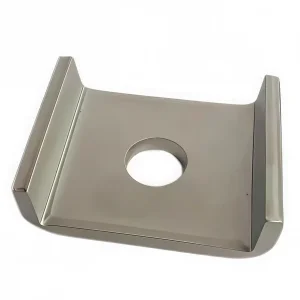
Robust support systems engineered to securely anchor large-scale industrial utility and municipal conduits.
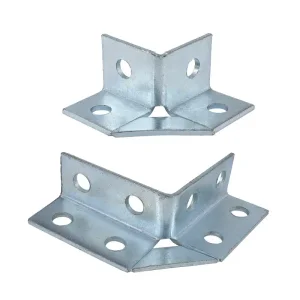
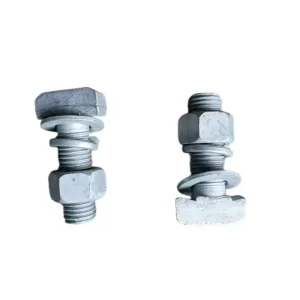
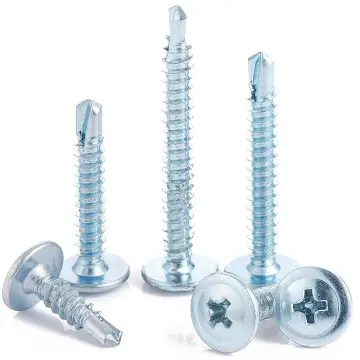
High-strength structural connections designed to withstand severe shear and tensile loads across wide spans.
The engineering roadmap for helical ground foundations is focused on material science advancements and intelligent, data-driven installation systems. Historically, basic carbon steel alloys like Q235B served as the industry standard. However, the modern transition to high-strength low-alloy (HSLA) steels, such as Q355B and specialized micro-alloyed variants, allows for reduced wall thicknesses while maintaining equivalent yield and ultimate tensile strengths. This decrease in steel volume significantly reduces global shipping costs and carbon intensity without compromising mechanical structural integrity.
Looking ahead, we expect the widespread adoption of smart foundation tracking systems. By integrating fiber-optic strain gauges or MEMS sensors into the core of the screw pile, structural engineers can monitor real-time bending moments, axial loads, and soil-degradation patterns. In terms of environmental sustainability, ground screws are positioned as a leading ESG-compliant foundation option. Because they can be easily uninstalled and recycled, they help transition construction projects toward a circular economy model. This alignment with global carbon reduction mandates makes them a key component for clean-energy developers worldwide.
The global value chain for spiral ground piles is undergoing significant structural shifts. While local regulations in Europe and North America enforce high environmental compliance and structural standards, China-based manufacturers remain essential suppliers. Chinese factories offer integrated manufacturing capabilities, access to primary steel markets, and advanced hot-dip galvanizing facilities. This combination allows for cost-efficient production that is difficult to replicate in other regions.
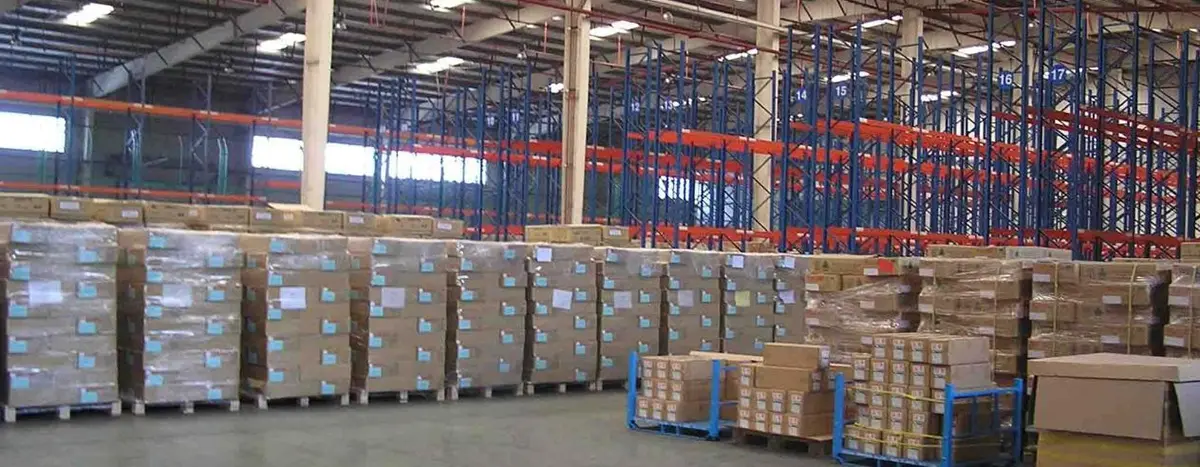
Our proximity to the Port of Tianjin and major rail routes allows us to manage complex international logistics. This logistical advantage ensures we can consistently deliver high-volume orders to key global infrastructure projects on time. By sourcing raw steel from premier national mills and managing the hot-dip galvanizing process internally, we maintain tight control over product quality. This end-to-end oversight ensures our ground screw foundations meet global technical standards and deliver long-term performance.
Watch our specialized factory operations, automated cold-forming lines, and mechanical stress test procedures designed to ensure that each fastener and ground pile exceeds international construction standards.
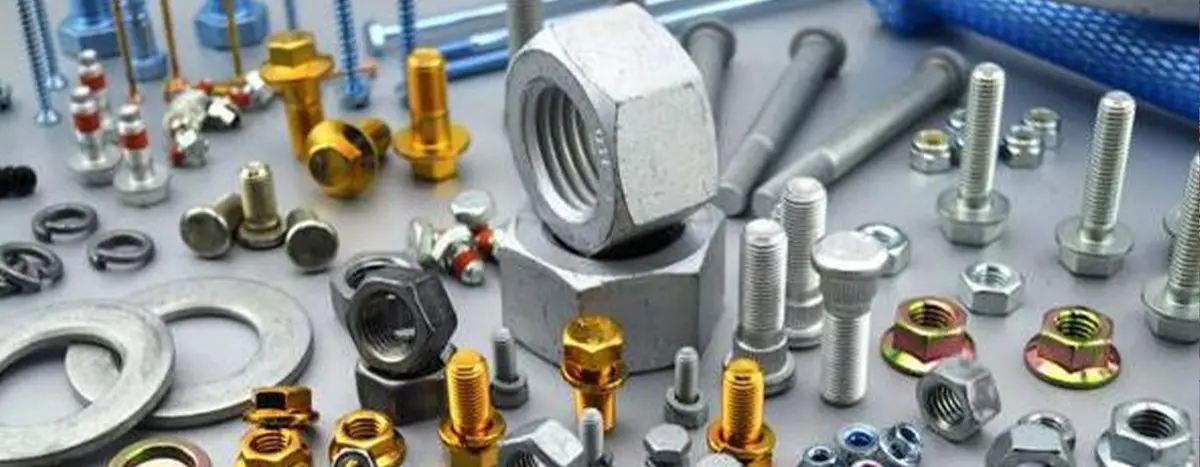
Deploying structural components internationally requires strict compliance with localized building codes and regulatory standards. A ground pile used in a utility-scale solar project in Spain must meet Eurocode 3 (design of steel structures) and Eurocode 7 (geotechnical design). In contrast, the same pile deployed in California must comply with the International Building Code (IBC) and ASCE 7 load requirements. Handan Ningyuan ensures total regulatory alignment by offering comprehensive design validation, finite element analysis (FEA) testing, and customized manufacturing configurations.
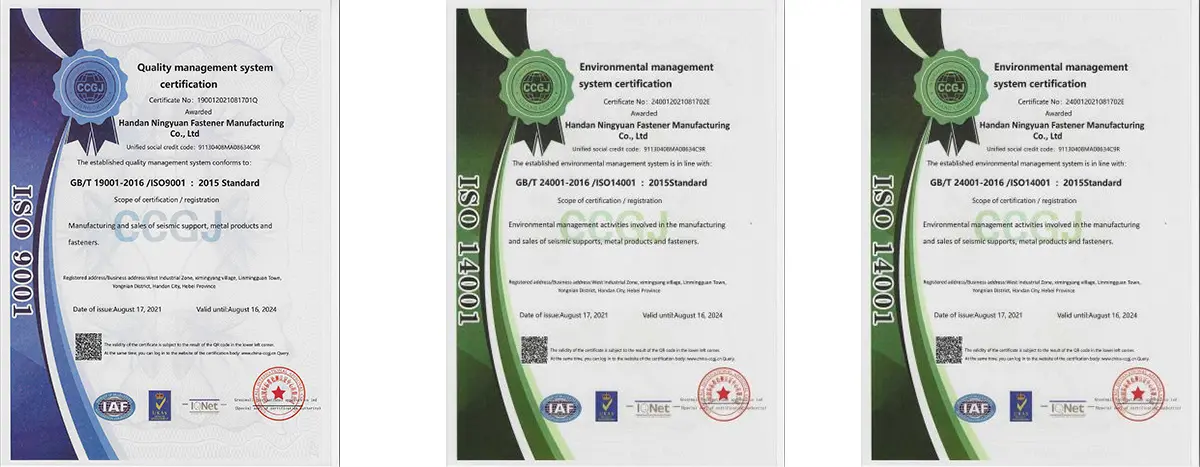
Our products undergo strict quality testing and hold major industry certifications. Our facilities and manufacturing protocols are certified under the ISO 9001 Quality Management System, RoHS environmental directives, GB/T 30512 automotive-grade chemical standards, and the EU's 2000/53/EC ELV compliance protocols. For clients with specific compliance needs, we can provide third-party verification documents, including mill test reports (MTRs) to ASTM standards, weld inspection reports using ultrasonic testing, and hot-dip galvanized coating measurements to ISO 1461. This level of quality assurance gives global engineering firms the confidence to specify our products for their critical infrastructure projects.
Our Manufacturing Facility Operates Under Rigorous International Quality Frameworks & Standards
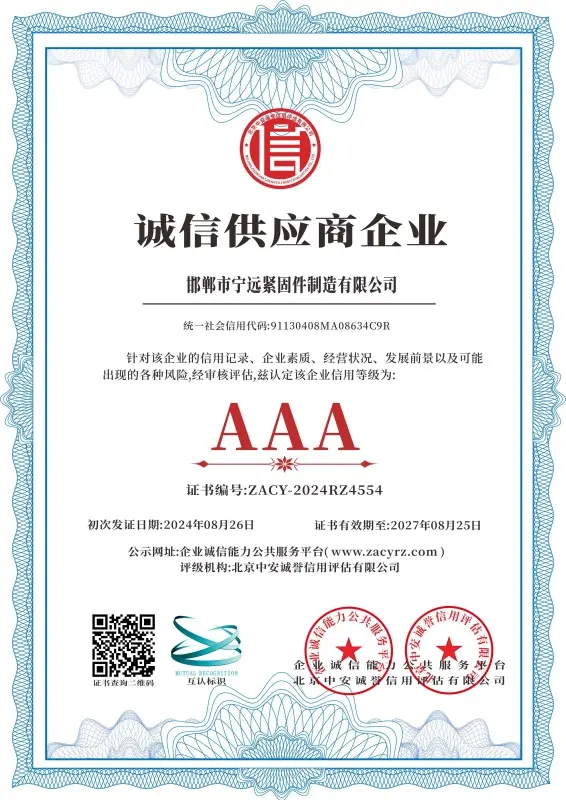
Quality Management System Certification
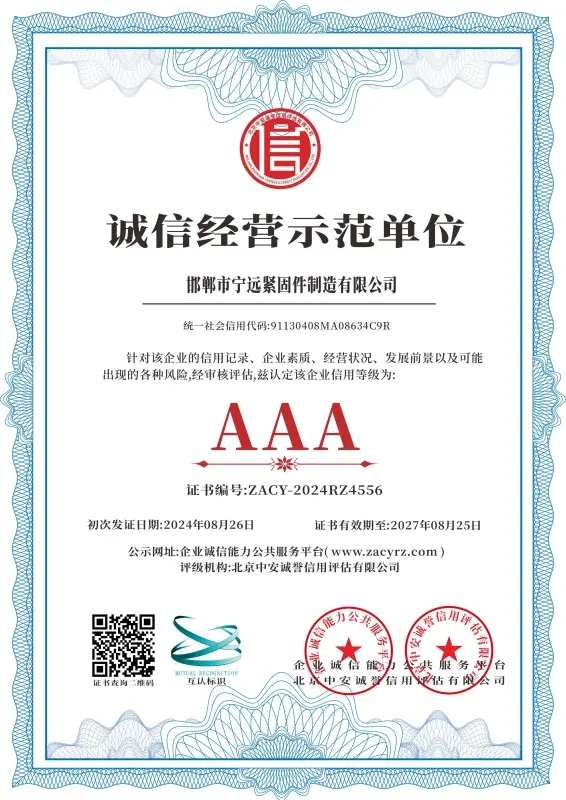
RoHS Environmental Compliance Certificate
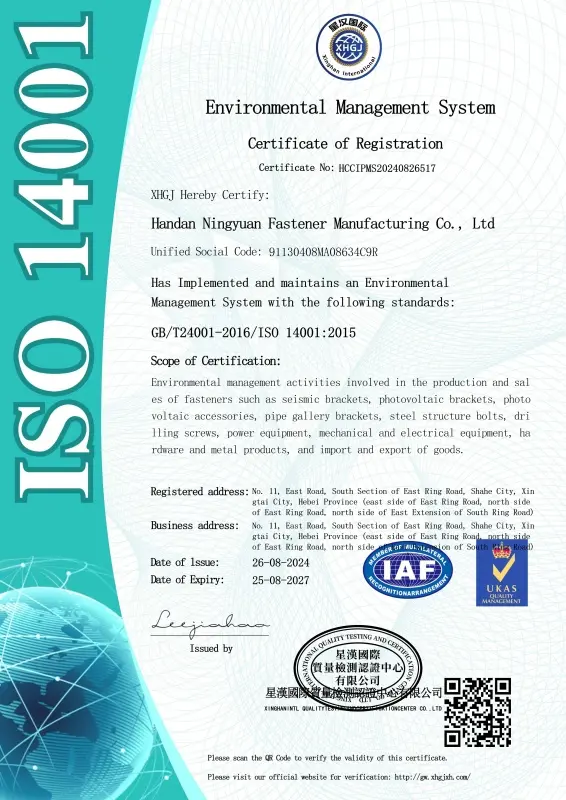
GB/T30512 Automotive Materials Standards
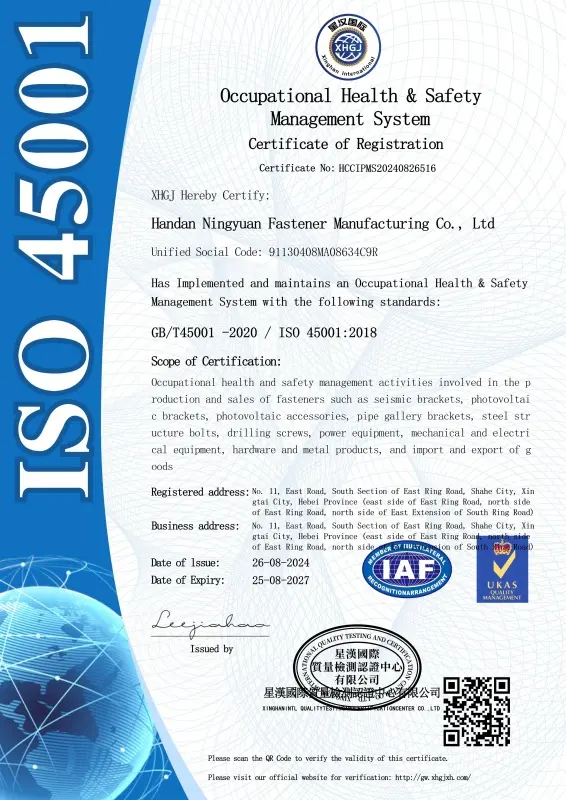
2000/53/EC ELV Environmental Audit
Direct Engineering Answers to Help Procurement Teams and Structural Specialists Make Informed Choices
We primarily utilize structural-grade Q235B and Q355B carbon steel (conforming to GB/T 700 and GB/T 1591). For specialized international applications requiring compliance with European or American specifications, we can source and manufacture to S235JR, S355JR, or ASTM A36 / ASTM A572 Grade 50 standards, ensuring matching yield strengths and fracture toughness characteristics.
Our helical piles are hot-dip galvanized in accordance with EN ISO 1461 or ASTM A123. The standard coating thickness is maintained at a minimum of 80 to 85 microns. This thickness provides excellent protection against atmospheric and underground corrosion, yielding an estimated operational life of over 25 to 30 years in standard soils (Class II and III) and up to 50 years in dry, non-corrosive conditions.
We conduct structural load analysis using mechanical modeling. The relationship between installation torque and ultimate capacity is determined using empirical torque-to-capacity correlation values (Kt factors). We provide complete torque charts based on shaft diameters and pitch configurations. Additionally, we support on-site static compression, tension, and lateral load testing to verify performance limits.
Yes. Our engineering department can design and manufacture custom flange plates (including round, square, and U-shaped designs), adjust wall thicknesses (from 3.0mm up to 8.0mm), and modify helical pitch configurations to meet the specific requirements of your racking and mounting structures.
Certified High-Strength Anchor Bolts, Connector Sleeves, and Hanger Bracket Assemblies
Detailed Visual Analysis of Component Designs, Specialized Mounts, and Heavy-Duty Connections
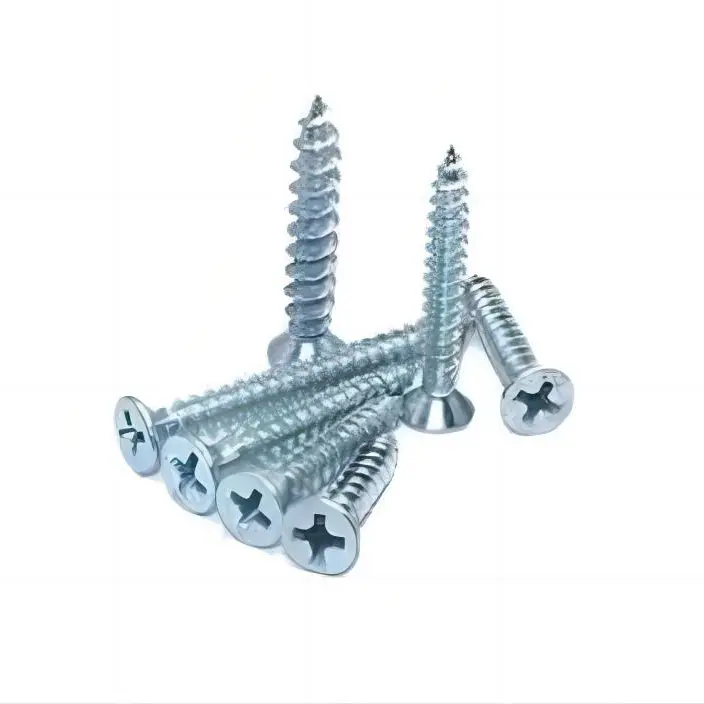
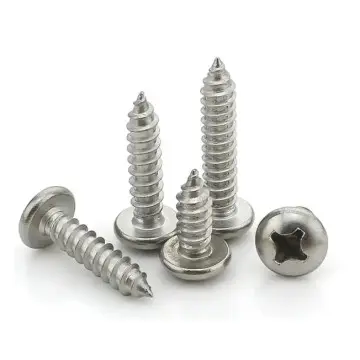
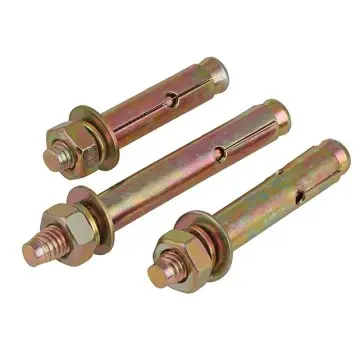
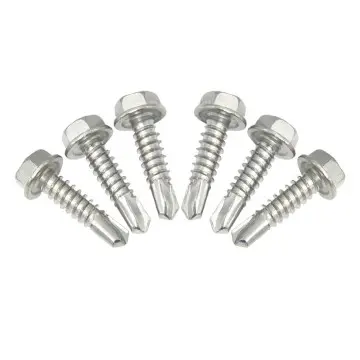
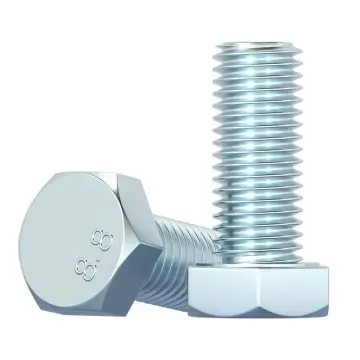
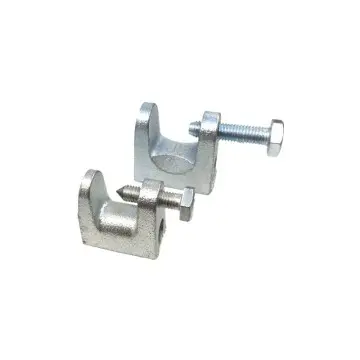
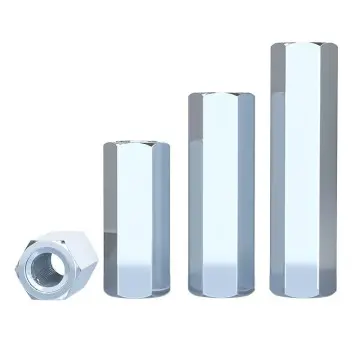

Contact our technical engineers for detailed CAD drawings and stress calculations.
Explore Product Catalog