Ningyuan Fastener Ningyuan Fastener

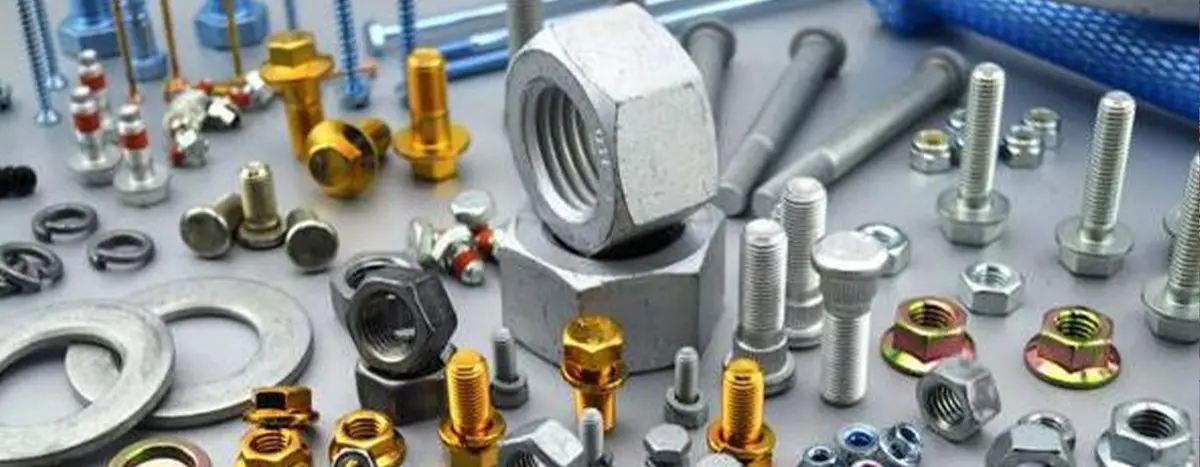
High-Quality M10 Threaded Rod Manufacturers & Factories

Precision-Engineered Anchor & Fastening Solutions for Industrial, Photovoltaic, and Structural Infrastructures

WhitepaperThe Engineering Standard of M10 Threaded Rods: Manufacturing & Global Procurement

Executive Abstract: Threaded rods—specifically the M10 specification (DIN 975 / DIN 976)—constitute the mechanical foundation of modern electromechanical hanging, structural reinforcement, and photovoltaic mounting assemblies. Understanding the differences in metallurgy, thread-rolling precision, corrosion-resistant coatings, and manufacturing certifications is critical for procurement executives seeking structural integrity and cost efficiencies. This whitepaper analyzes these elements under strict engineering standards.

PRODUCTION EXCELLENCE Handan Ningyuan Fastener Manufacturing Co., Ltd.

Founded in 2005 (formerly Jin Langtao) and substantially restructured for high-capacity industrial scale in 2016, Handan Ningyuan Fastener Manufacturing Co., Ltd. has established itself as an industry leader in Yongnian, Hebei—globally recognized as the "Fastener Capital of China".

Over nearly two decades of operations, Ningyuan has built an integrated operational framework comprising an advanced R&D department, central manufacturing department, and dedicated international sales division. Our solutions span high-end standard parts, photovoltaic new energy mounting systems, electromechanical seismic supports, integrated pipe gallery brackets, and high-strength construction anchors.
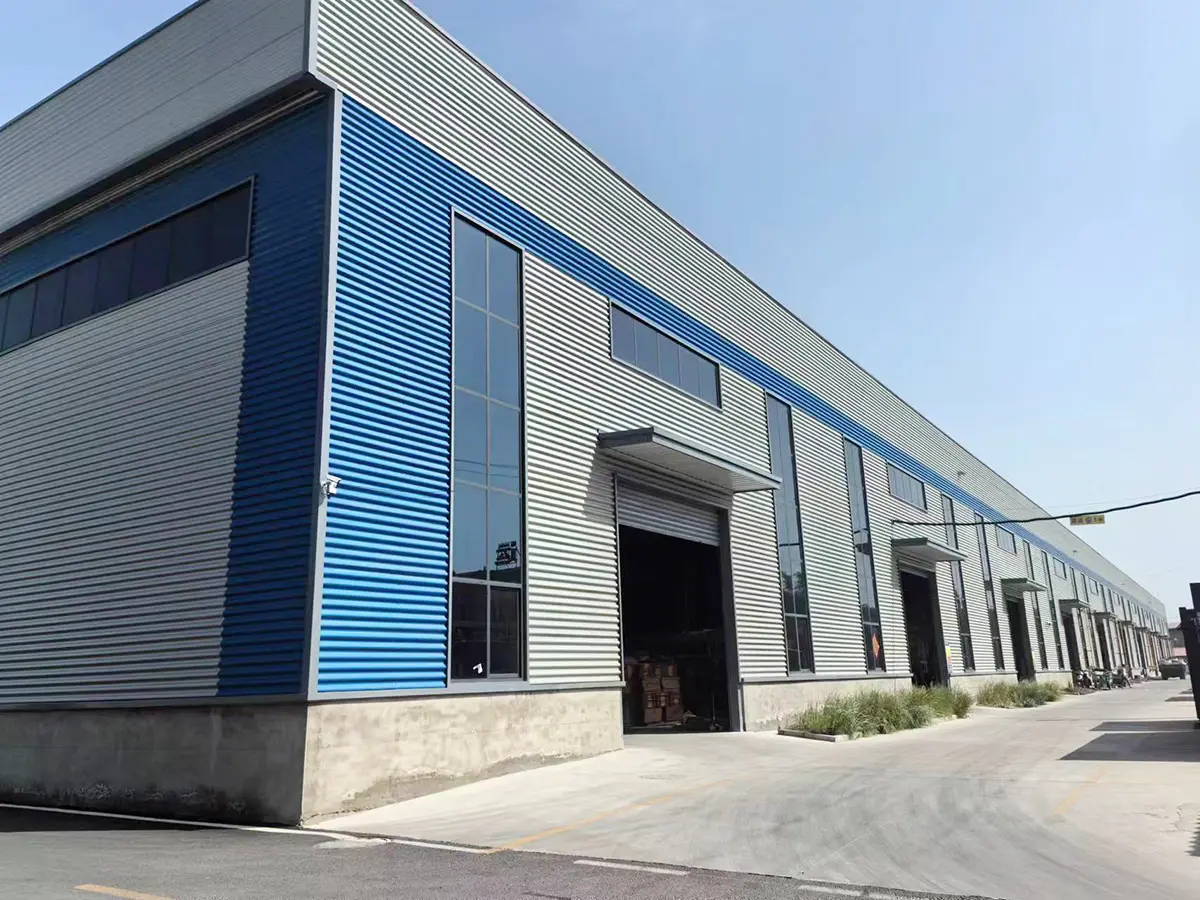
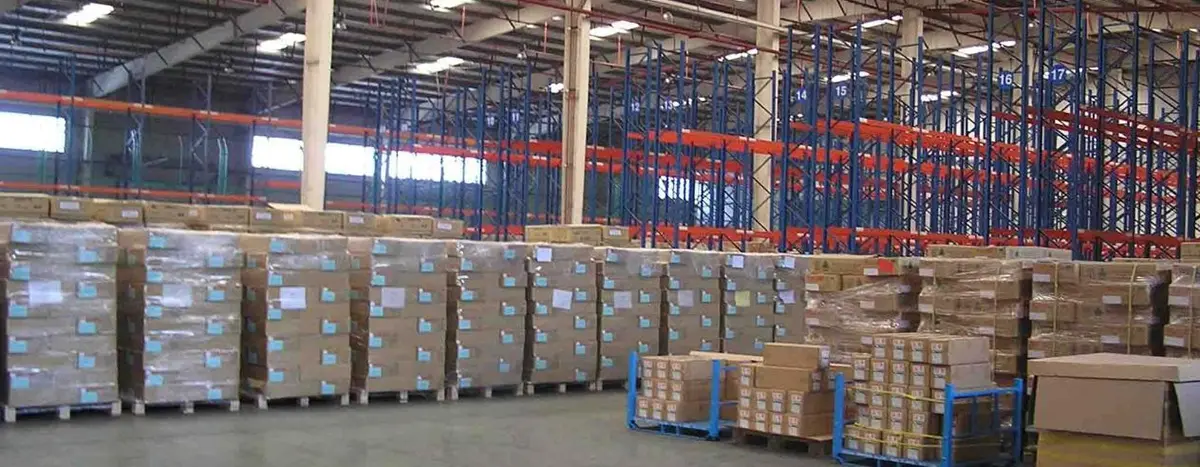
Handan Ningyuan Fastener Manufacturing Factory
2005
Established Year
66+
Experienced Staff
50+
Manufacturing Assets
20,000m²
Factory Footprint
70M
Annual Turnover (RMB)

Technical SpecsMechanical Characteristics & Material Science of M10 Threaded Rods

Selecting the correct thread profile, pitch, carbon ratio, and finishing coating determines the lifespan, safety limits, and shear load profiles under seismic or environmental forces.

⚙️

1. Dimensional & Thread Profile Standards

M10 Threaded Rods conform to standard international metrics. The nominal diameter is 10mm, with standard coarse thread pitch measuring 1.5mm and fine thread variants at 1.25mm or 1.0mm. Threads are rolled using hardened dies under hydraulic pressure to keep grain flow lines intact, increasing fatigue resistance compared to cut threads.

🔬

2. Metallurgy & Material Selection

Ranging from low carbon steel (Grade 4.8) for light hanging assemblies, to medium carbon alloy steel (Grade 8.8, 10.9) quenched and tempered for heavy structural loads. Corrosion-resistant projects require Stainless Steel SUS304 (A2-70) or SUS316 (A4-80) to resist oxidation and acidic breakdown.

🛡️

3. Coating & Surface Treatments

Treatments include zinc electroplating for indoor environments, Hot-Dip Galvanization (HDG) conforming to ISO 1461 for outdoor/photovoltaic installations requiring up to 50-80 microns of zinc barrier, and Dacromet or Geomet finishes for automotive and marine utility.

M10 Threaded Rod Mechanical Performance Metrics

Property Class / Steel Alloy Tensile Strength (Nominal) Yield Strength (Min) Standard Application Environments Corrosion Resistance Class
Class 4.8 Carbon Steel 400 N/mm² 320 N/mm² General HVAC suspension, dry walls, interior supports Low (Requires indoor zinc plating)
Class 8.8 High-Tensile Steel 800 N/mm² 640 N/mm² Heavy steel structural joints, seismic braces, machinery mounting Medium (Typically Hot-Dip Galvanized)
Class 10.9 Alloy Steel 1040 N/mm² 940 N/mm² Heavy-duty infrastructure pipelines, automotive, heavy machinery Medium-High (Dacromet/Zinc Flake)
SUS304 (A2-70) Stainless Steel 700 N/mm² 450 N/mm² Food processing lines, chemical industries, solar mounting structures High (Natural oxide passivation)
SUS316 (A4-80) Stainless Steel 800 N/mm² 600 N/mm² Offshore oil & gas rigs, marine hardware, highly acidic soils Extreme (Molybdenum alloy structure)

ApplicationsMacro-Industry Infrastructure & System Integration

Ningyuan Fasteners manufactures comprehensive anchoring and framing components that integrate directly with M10 threaded rods. Explore our critical industry solutions:

☀️

Photovoltaic & Green Energy Solutions

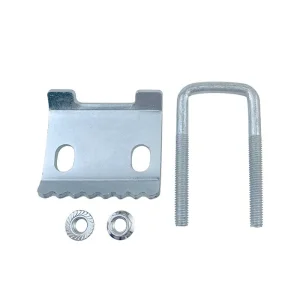
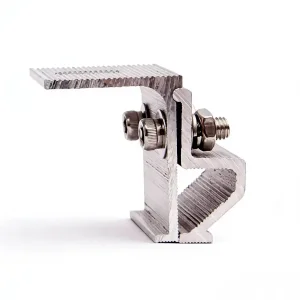
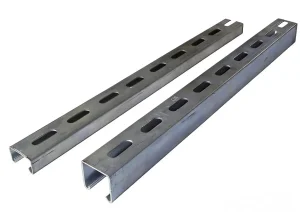
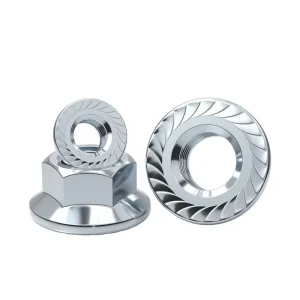
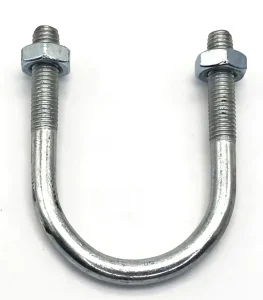
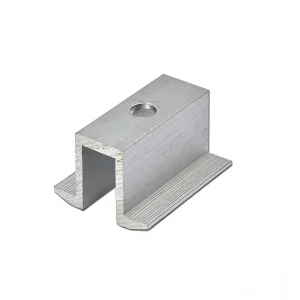
M10 Threaded Rods link heavy solar steel configurations. Operating with C-shaped steel channels, U-shaped brackets, solar press blocks, and hot-dip galvanized nuts, our fasteners anchor commercial solar arrays. These components resist wind lift and environmental exposure over 25+ years.

🏢

Building Electromechanical Seismic Supports

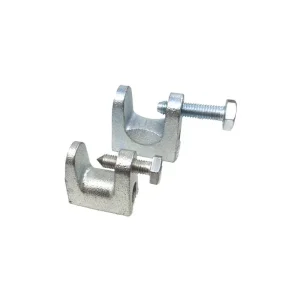
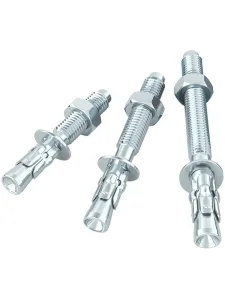
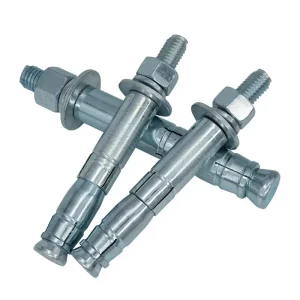
Modern commercial buildings use M10 rods for safety-critical seismic restraints. Acting alongside pipe gallery systems, steel beam clamps, and concrete wedge anchor expansion bolts, these parts secure sprinkler lines, electrical conduits, and ventilation networks during seismic events.

🏭

Heavy Steel Structure Engineering

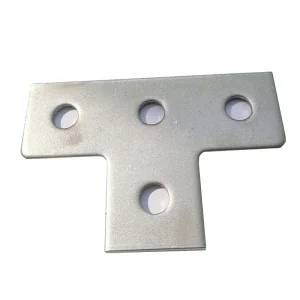
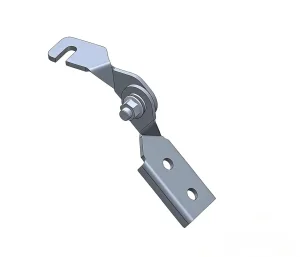
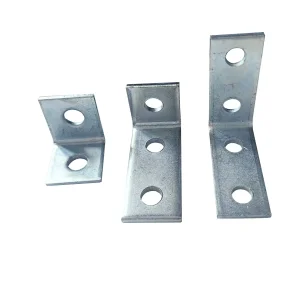
High-strength dry wall anchoring, corner connector joints, Tiger's clips, and heavy-duty structural bolts establish critical connections in modular industrial warehouses, pre-engineered steel buildings, and civil infrastructure projects.
Structural & Industrial Applications Gallery

Seismic Support Application

Seismic Bracing

Photovoltaic Structural Mounts

Photovoltaic Mounts

Underground Pipe Gallery System

Pipe Gallery System

High Strength Fastener Assembly

Industrial Fastening

Verified ExcellenceOur Manufacturing Powerhouse & Facility Tour

Advanced Machining & Scalability

Equipped with over 50 automated production assets including advanced cold-heading machines, precision thread rolling lines, automated heat treatment furnaces, and surface finishing chambers, we produce 60 million+ fastener parts annually.
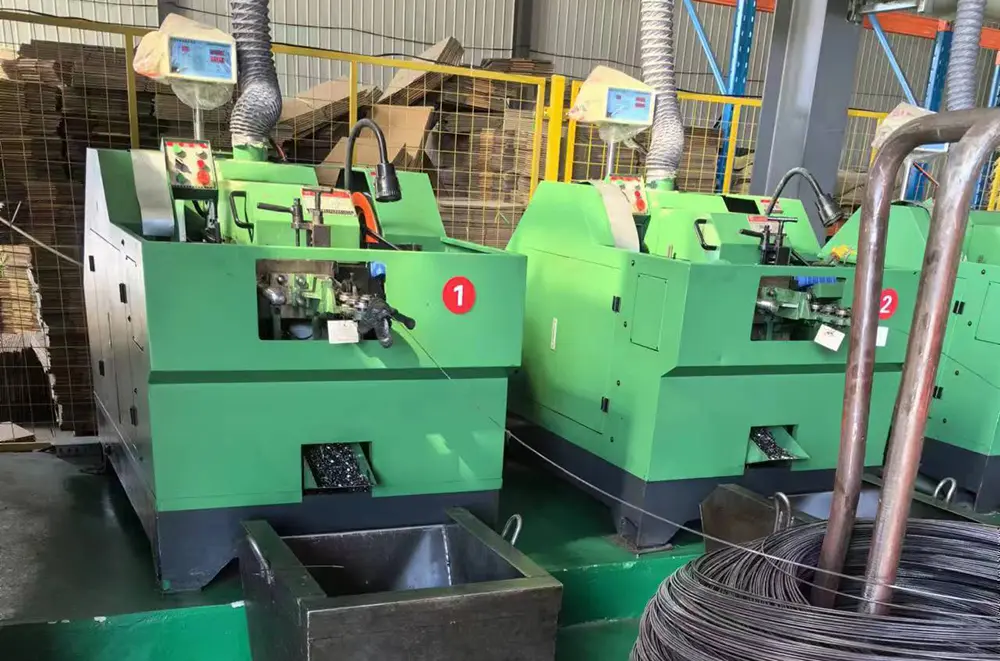
Key Manufacturing Capabilities:

  • Cold forging & thread forming for zero-waste production.
  • Dedicated Quality Testing labs for tensile, hardness, and dimensions.
  • In-house custom tooling department for specialty thread profiles.
  • Continuous-belt heat treatment for precise mechanical grade matching.
Automated Fastener Manufacturing Equipment

Integrated Quality Management Systems

Our factory processes are structured around zero-defect manufacturing. We operate under strict Quality Assurance (QA) protocols, monitoring every phase from wire coil pickling to final thread pitch validation.

By sourcing from verified steel manufacturers, we ensure that raw steel lots are tracked with full heat numbers and Mill Test Certificates (MTC) to guarantee material transparency for worldwide engineering projects.

ComplianceQuality Standards, Environmental Guarantees & Certifications

Ningyuan Fasteners maintains high testing standards, enabling compliance in markets like the European Union, North America, and the Asia-Pacific region.

📜

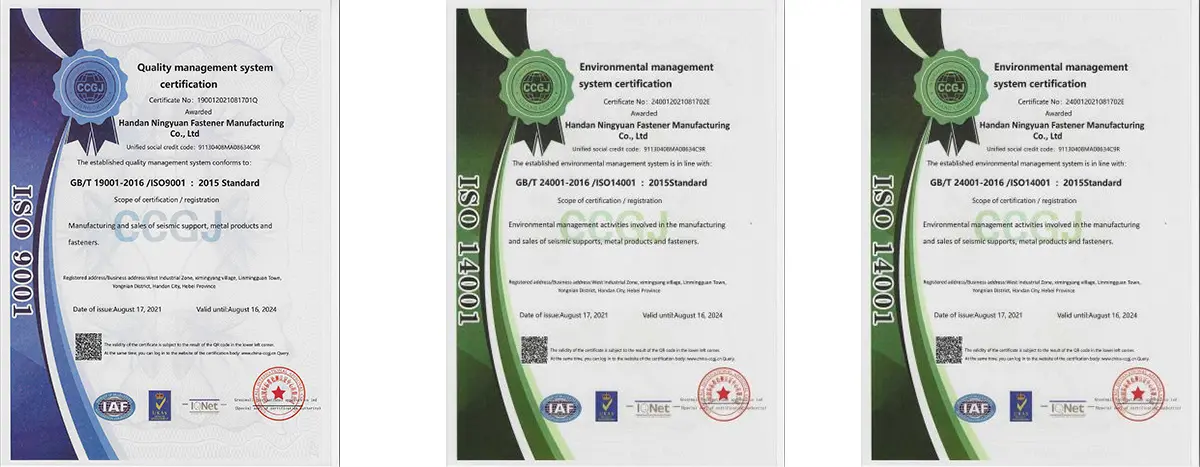
ISO 9001:2015 Certification

Our facilities are audited under ISO 9001 quality systems. Every manufacturing process operates according to written SOPs, with standard checkpoints for dimensional validation, hardness profiles, and threads.

🌱

RoHS & ELV Compliance

Conforming to EU RoHS directives and 2000/53/EC End of Life Vehicles (ELV) regulations. Our platings are free from hexavalent chromium (CrVI), providing non-toxic surface protection.

🚘

GB/T30512 Auto Standards

Our fasteners meet Chinese national automotive standards for prohibited substances, confirming material safety and chemical purity for applications in automotive and heavy transit assemblies.
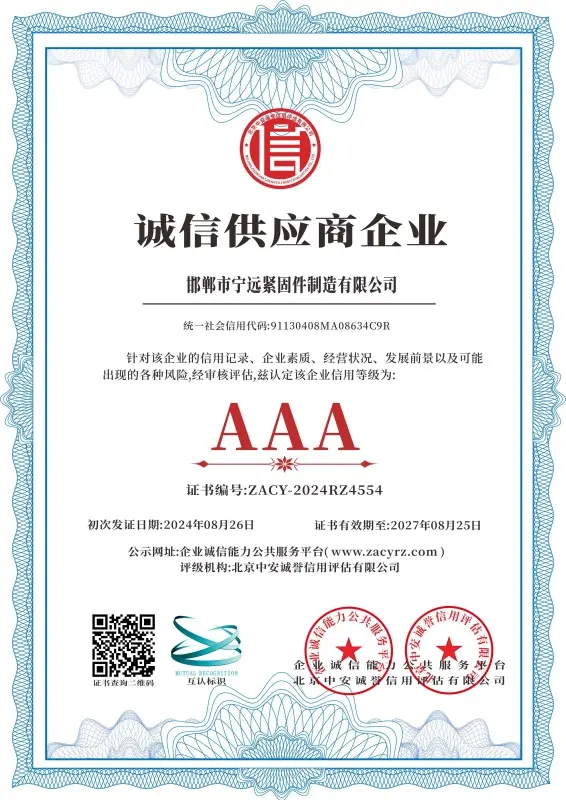
Accredited Testing & Quality Certificates

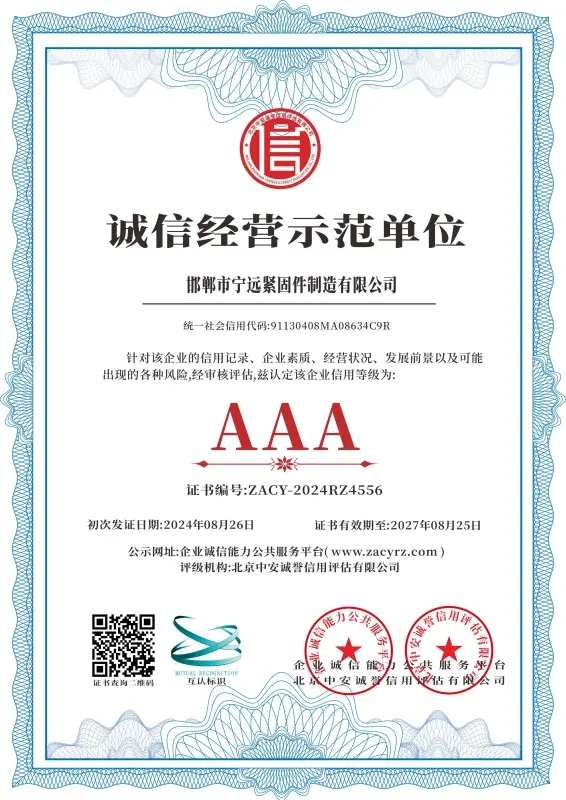
Ningyuan Quality Certificate 1

ISO 9001 Standard

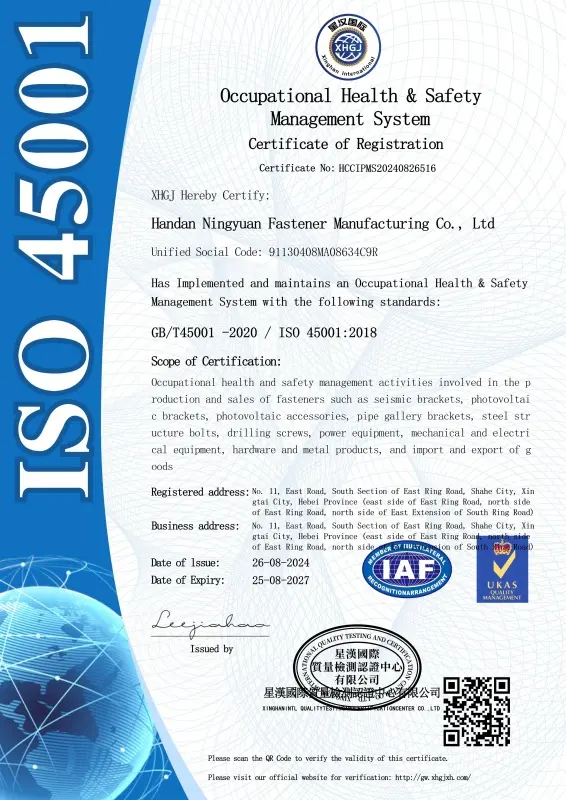
Ningyuan Quality Certificate 2

Safety Accreditation

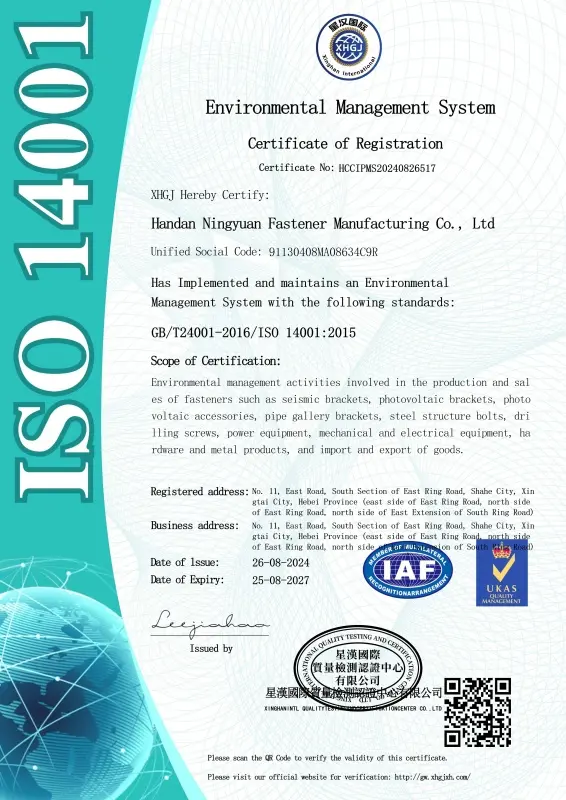
Ningyuan Quality Certificate 3

Environment Protection

Ningyuan Quality Certificate 4

Standard Compliance

RoadmapTechnical Evolution & Future Outlook

Industry 4.0 & Advanced Green Metallurgy

The global fastener industry is moving toward automated smart production and carbon-neutral raw materials. At Ningyuan, our technology roadmap outlines key milestones for the next decade:

  • Automated Inspection: Integrating inline high-speed optical sort machines and laser micrometer arrays to guarantee thread pitch profile perfection across high-volume production.
  • Ultra-Corrosion Resistant Platings: Developing zinc-nickel (Zn-Ni) and non-electrolytic zinc flake coatings to replace traditional galvanizing. These coatings deliver over 1,500 hours of red rust protection in salt spray testing without hydrogen embrittlement risks.
  • Carbon Reduction: Collaborating with structural steel mills to secure recycled and lower-carbon steel coils, aligning fastener production with global corporate ESG initiatives.

Global Sourcing Checklist

When ordering M10 threaded rods from manufacturing sources, verify:
✅ Mill Test Certificates (MTC) matching the raw steel batch.
✅ Salt spray test reports specifying exposure performance.
✅ Thread ring gauge compliance (6g/6H tolerance classes).
✅ VCI anti-rust protective packaging inside sea freight boxes.

Knowledge HubFrequently Asked Questions: M10 Threaded Rod Sourcing & Engineering

What is the standard pitch configuration for a standard M10 threaded rod?
The standard coarse thread pitch for an M10 threaded rod is 1.5mm. Fine thread variations are also produced with pitches of 1.25mm or 1.0mm. Standard sizing is defined in metric fastener specifications (DIN 975/DIN 976). Coarse thread is typically chosen for general structural concrete anchoring and HVAC setups because of its fast installation times and resistance to stripping.
Which is better for outdoor industrial utility: Zinc Plated or Hot-Dip Galvanized (HDG) M10 rods?
Hot-Dip Galvanizing (HDG) is superior for outdoor, infrastructure, and solar projects. Zinc plating provides a thin rust barrier (around 3 to 10 microns) suited for indoor settings. HDG applies a zinc coating layer of 50 to 80 microns, providing decades of protection. Remember to match HDG rods with oversized tapped nuts (e.g., 6G tolerance) to account for the thickness of the zinc layer.
How do Class 4.8 and Class 8.8 M10 threaded rods differ?
The difference lies in material chemistry and heat treatment. Class 4.8 rods are made from low carbon steel, with a tensile strength of 400 N/mm² and yield strength of 320 N/mm². Class 8.8 rods are quenched and tempered medium carbon steel, with a tensile strength of 800 N/mm² and yield strength of 640 N/mm². Class 8.8 is required for structural steel connections and seismic bracing designs.
How does Ningyuan ensure quality control across high-volume production?
Quality control processes at Handan Ningyuan are audited under ISO 9001:2015. We conduct inbound raw material analysis (verifying chemical compositions), monitor tool wear during thread forming, perform tensile testing (ASTM F606), and execute salt spray checks (ASTM B117). We issue Mill Test Certificates (MTC) and testing documentation for every shipment.
Can M10 threaded rods be used in mechanical seismic support structures?
Yes. M10 rods are frequently used in electromechanical seismic hangers. Under seismic design standards, engineers calculate the tension and shear capacities of Class 8.8 or stainless steel M10 rods to support pipelines, cable trays, and ventilation units. Use with beam clamps and concrete drop-in anchors to ensure stability.
What is the advantage of using rolled threads over cut threads?
Thread rolling is a cold-forming method that reshapes steel grains rather than cutting them. This maintains unbroken grain flow lines, enhancing shear strength, fatigue life, and thread surface finish. It also increases production throughput, which helps lower costs for bulk procurement.
Does Handan Ningyuan supply free samples for testing?
Yes. We supply free product samples of our standard fastener lines to global procurement teams for engineering verification, size checks, and plating testing. Contact our sales department to arrange shipping.
How are threaded rods protected from rust during ocean shipping?
Long-distance ocean transport is subject to humid, salty environments. To prevent transit oxidation, our products are treated with anti-rust oils, wrapped in VCI (Volatile Corrosion Inhibitor) plastic film, boxed in sturdy cartons, and secured onto IPPC heat-treated wooden pallets.